
Cloning
CLONING is a method of producing GENETICALLY IDENTICAL COPIES of plants or animals. There are different ways to clone, including:
- TISSUE CULTURE and CUTTINGS for plants.
- EMBRYO TRANSPLANTS and ADULT CELL CLONING for animals.
Plant Cloning
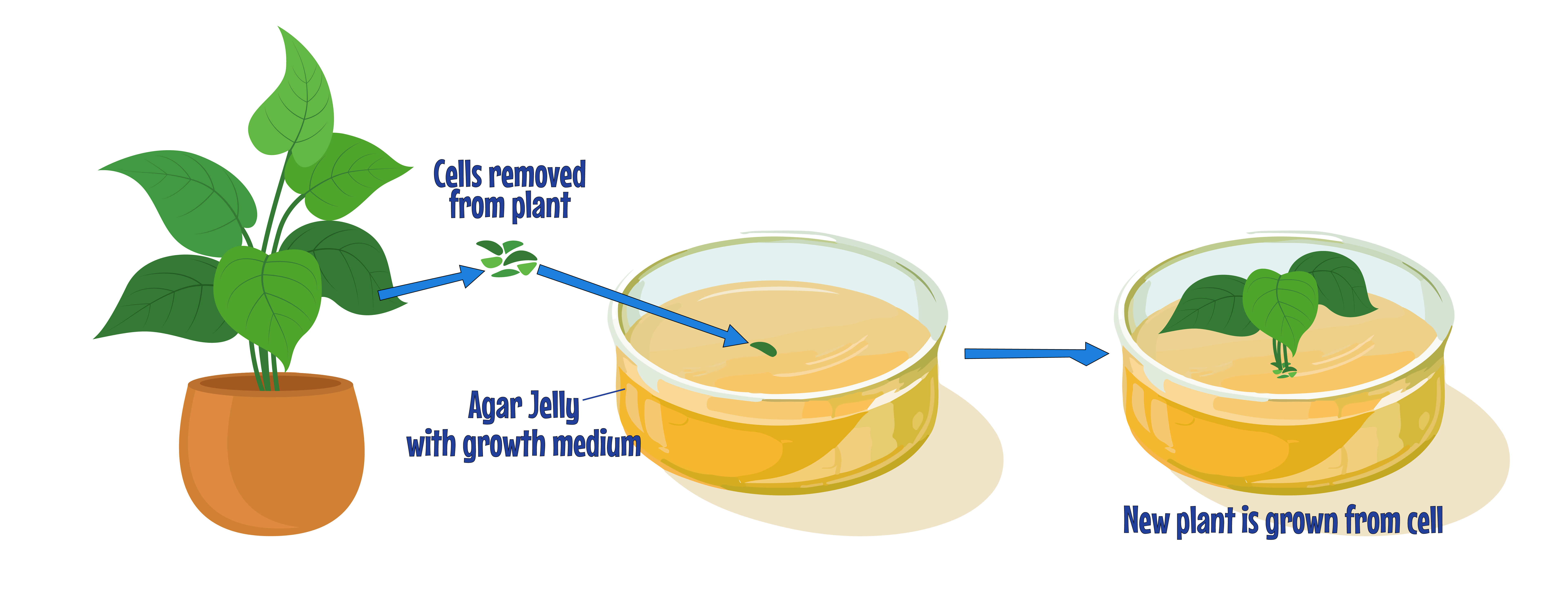
1. TISSUE CULTURE:
TISSUE CULTURE involves placing a small group of PLANT CELLS in a GROWTH MEDIUM with HORMONES. These cells grow into new PLANTS that are CLONES of the parent plant.
This method is used to produce plants QUICKLY and can be done ALL YEAR in a small amount of space.
It is also important for PRESERVING RARE plant species that would not survive in natural conditions.
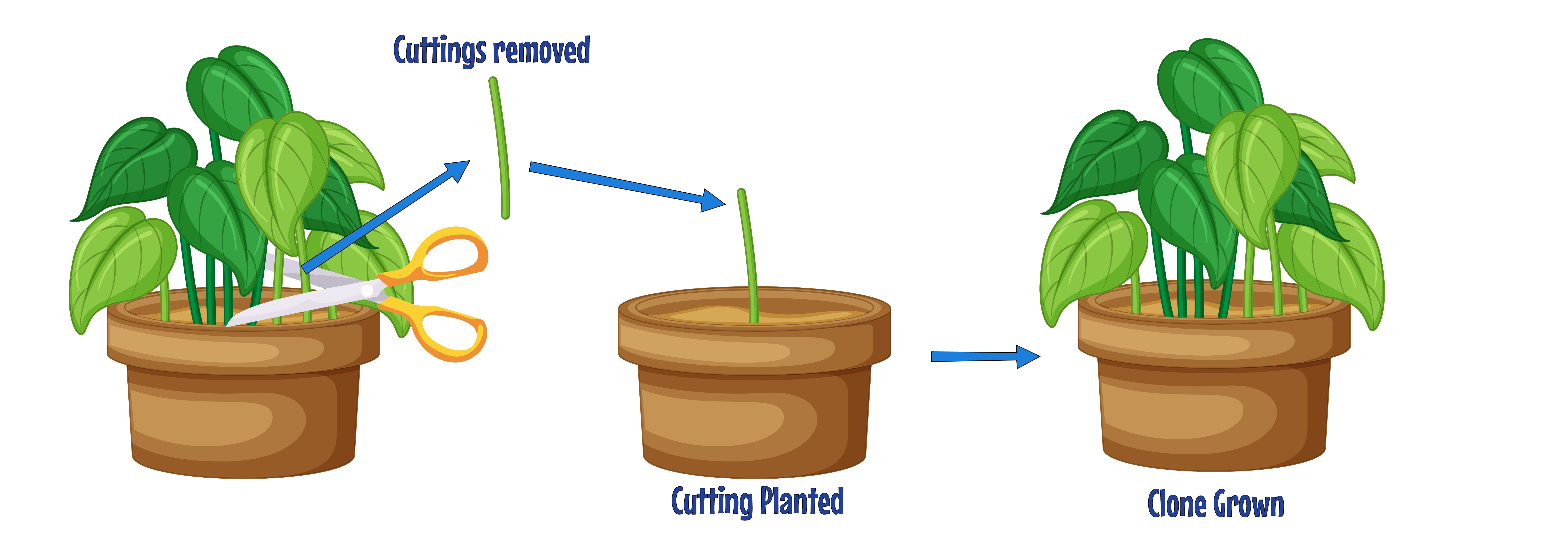
2. CUTTINGS:
Gardeners take CUTTINGS from good parent plants and plant them in soil to produce GENETICALLY IDENTICAL COPIES.
This method is OLDER and SIMPLER than tissue culture, but it is QUICK and CHEAP.
Animal Cloning
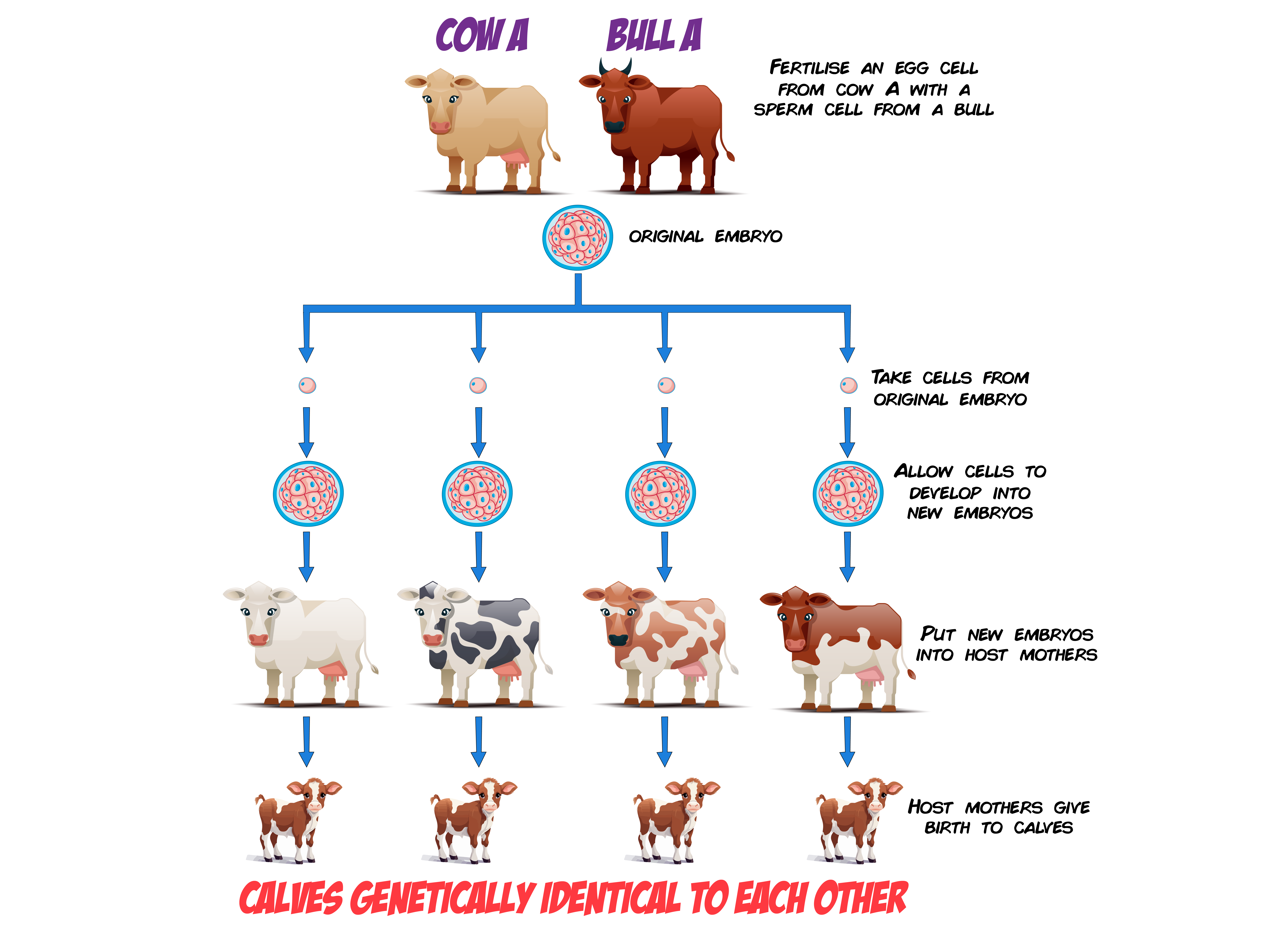
3. EMBRYO TRANSPLANT
EMBRYO TRANSPLANTS involve using several cells from an embryo to create several clones of it.
A male fertilises a female's egg cell, and when it turns into a DEVELOPING ANIMAL EMBRYO, it is SPLIT and transferred to several OTHER host females BEFORE they are DIFFERENTIATED into SPECIALISED cells.
The host mothers then give birth to offspring which are all IDENTICAL TO EACH OTHER.
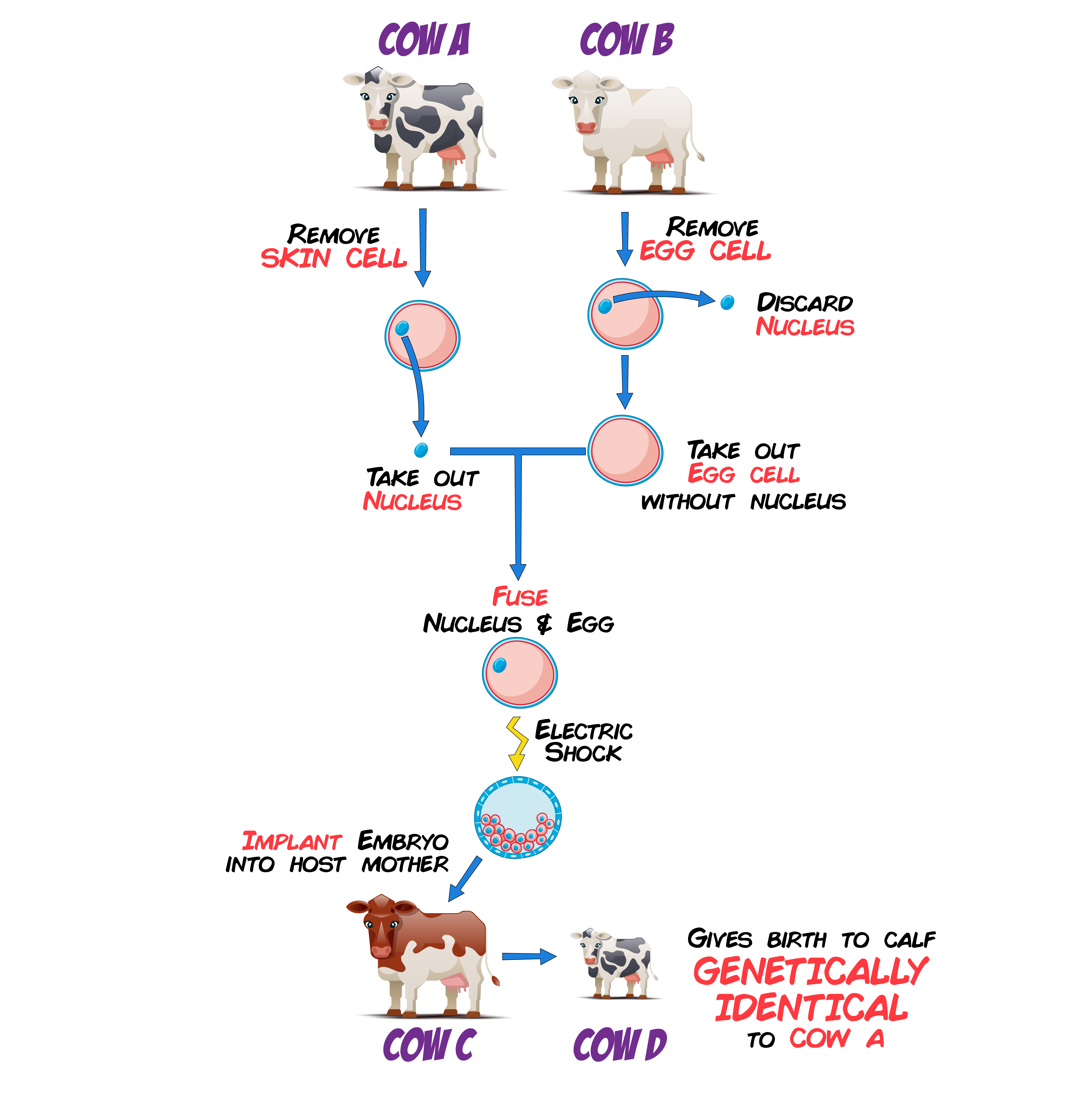
4. ADULT CELL CLONING
ADULT CELL CLONING involves taking an UNFERTILISED EGG CELL and removing its nucleus.
The nucleus is replaced with one from an ADULT BODY CELL (e.g. a skin cell).
The egg cell is then stimulated by an ELECTRIC SHOCK to make it DIVIDE like a normal embryo.
Once it develops into a ball of cells, it’s IMPLANTED into the womb of an ADULT FEMALE.
The adult female then gives birth to a GENETICALLY IDENTICAL CLONE of the original ADULT BODY CELL.
Issues Surrounding Cloning
1. REDUCED GENE POOL: Cloning produces many identical offspring, which reduces genetic diversity. This can make the population vulnerable to diseases.
2. Ethical concerns include the welfare of cloned animals, potential health issues, and the long-term effects on genetic diversity.
3. Cloning can be used to help conserve ENDANGERED SPECIES but also raises concerns about cloning in humans and the consequences of any UNSUCCESSFUL ATTEMPTS.