
Variation
Every organism in most species are DIFFERENT to each other and have DIFFERENT characteristics. (eg. No two humans on the world are exactly the same).
These differences are known as VARIATION in the species and they could be down to:
1. GENETIC VARIATION
The genes all individuals INHERIT from their parents are all different due to the random mixing of DNA in the gametes.
The only exception to this rule are IDENTICAL TWINS.
This leads to different GENOTYPES which can also give different PHENOTYPES.
2. ENVIRONMENTAL VARIATION
An organism’s genome (all its DNA) can interact with the ENVIRONMENT in which it lives and develops in. This can influence the development of the phenotype of the organism.
E.g. Human’s living closer to the equator where their ENVIRONMENT exposes them to MORE SUNLIGHT tend to have a phenotype of DARKER SKIN to help protect them against ultraviolet radiation damage.
3. A COMBINATION OF GENETIC AND ENVIRONMENTAL VARIATION
Most variation in phenotype is determined by a MIXTURE of genetic and environmental factors.
E.g. A persons weight can be influenced by the genes they inherit AND the amount of food they eat.
MUTATIONS:
- MUTATIONS are changes to the sequence of DNA that can occur randomly or due to environmental factors. They can be inherited if they occur in gametes.
- A mutation can alter a GENE, leading to a different sequence of AMINO ACIDS in a protein, which can change the protein's function.
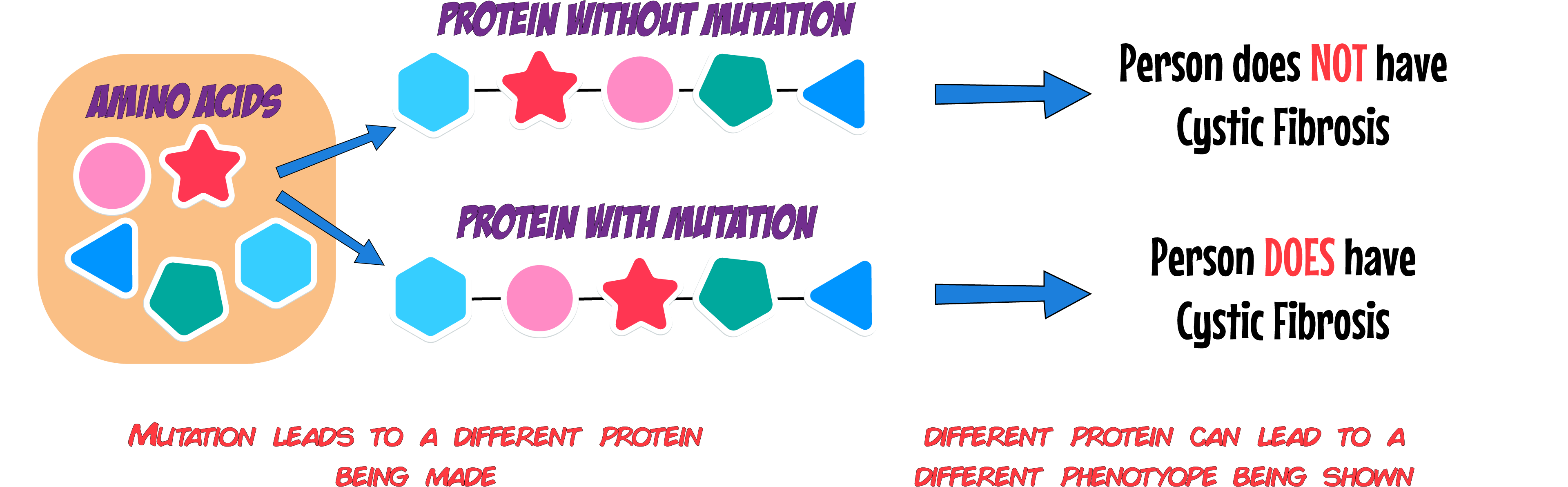
- The effects of mutations on an organism's PHENOTYPE can vary. Many mutations have minor or no visible effects, while others can significantly impact the phenotype, sometimes leading to disorders like cystic fibrosis.
- Dramatic Mutations can be particularly influential, causing significant changes in the phenotype and potentially affecting an individual's ability to survive and reproduce.
- If a mutation results in a trait that provides an ADVANTAGE in a specific environment, it may become MORE COMMON in the population through NATURAL SELECTION.