The Nervous System
The NERVOUS SYSTEM allows humans to REACT to their surroundings and COORDINATE their behaviour.
PARTS OF THE NERVOUS SYSTEM:
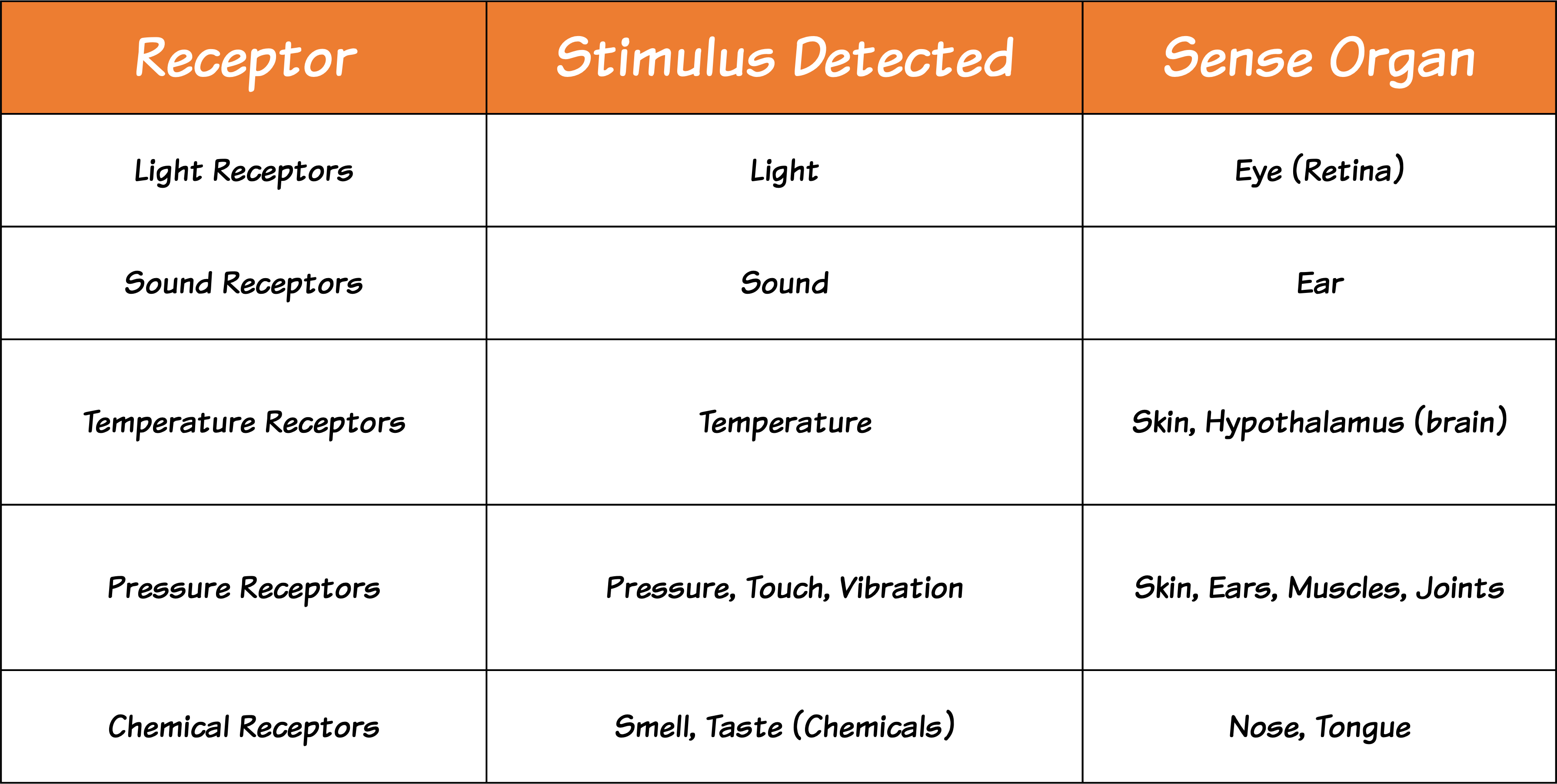
RECEPTORS:
Cells that DETECT STIMULI (A change in environment). They are found in SENSE ORGANS. Examples of these are:
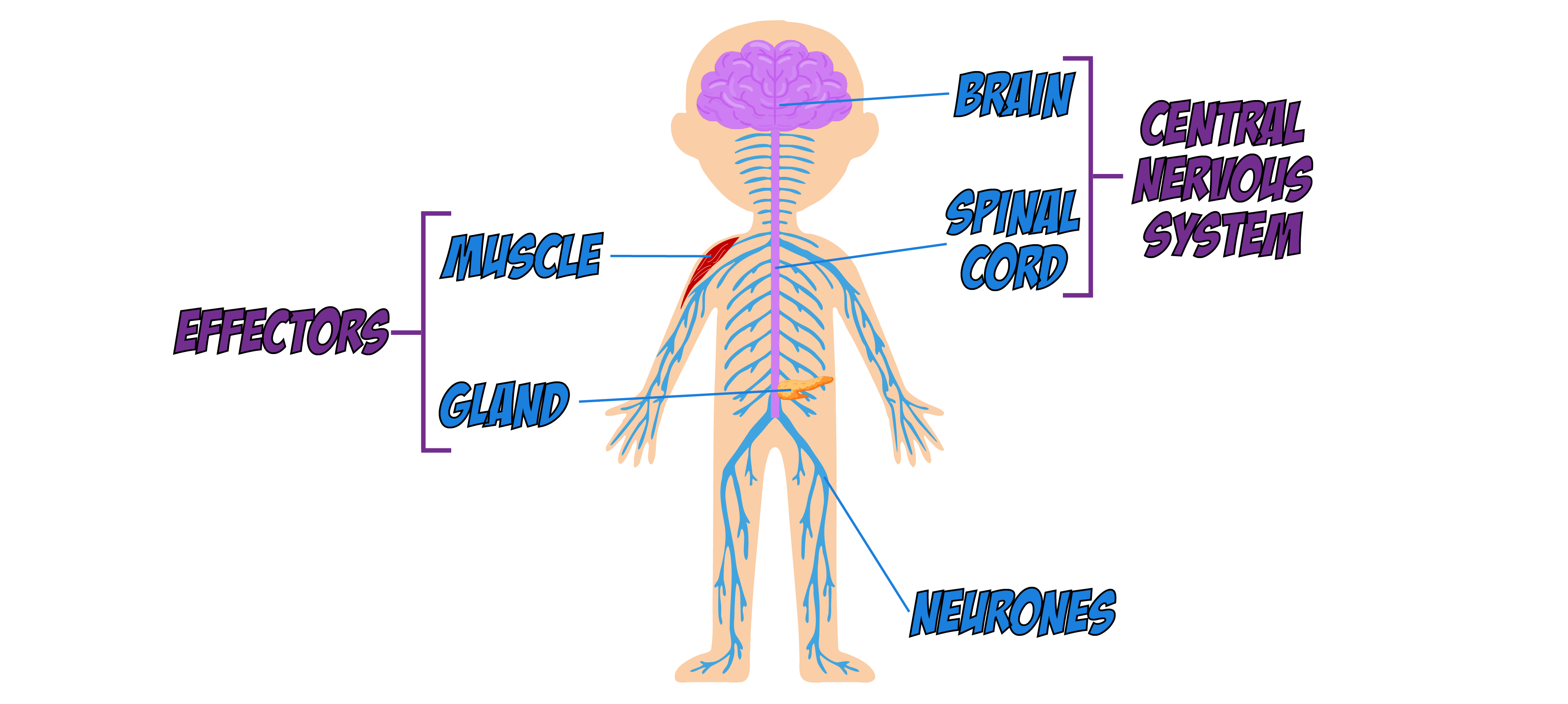
EFFECTORS:
Effectors provide a RESPONSE for actions.
They can either be a MUSCLE or GLAND.
A muscle CONTRACTS to respond and a gland SECRETES HORMONES.
CENTRAL NERVOUS SYSTEM (CNS):
- Consists of the BRAIN and SPINAL CORD.
- These act as the COORDINATION CENTRE for nervous responses where they PROCESS the information from RECEPTORS and send back a response to EFFECTORS.
NEURONES
All the structures in the nervous system are connected by NEURONES.
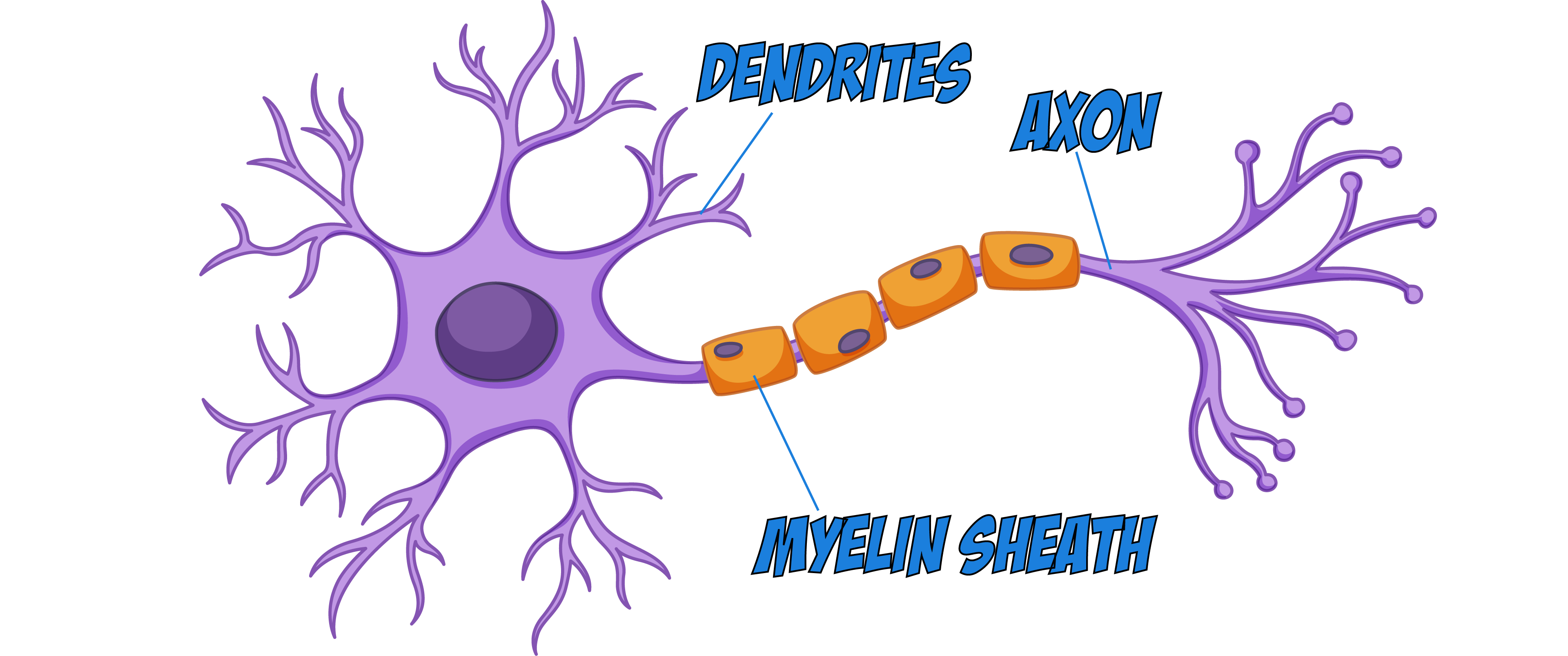
Theses are NERVE CELLS which are specialised to transmit information around the body in the form of ELECTRICAL IMPULSES.
There are THREE types of neurones:
1. SENSORY NEURONES:
They carry information from RECEPTORS to the CNS as electrical impulses.
2. MOTOR NEURONES:
They transmit electrical impulses from the CNS to EFFECTORS.
3. RELAY NEURONES:
These are only used in REFLEX RESPONSES (see later).
They are found in the SPINAL CORD.
They connect SENSORY NEURONES to MOTOR NEURONES directly.
How the Nervous System Works
There are TWO types of responses that the nervous system can make:
1. VOLUNTARY RESPONSES
These are CONSCIOUS responses that involve the BRAIN as the COORDINATION CENTRE.
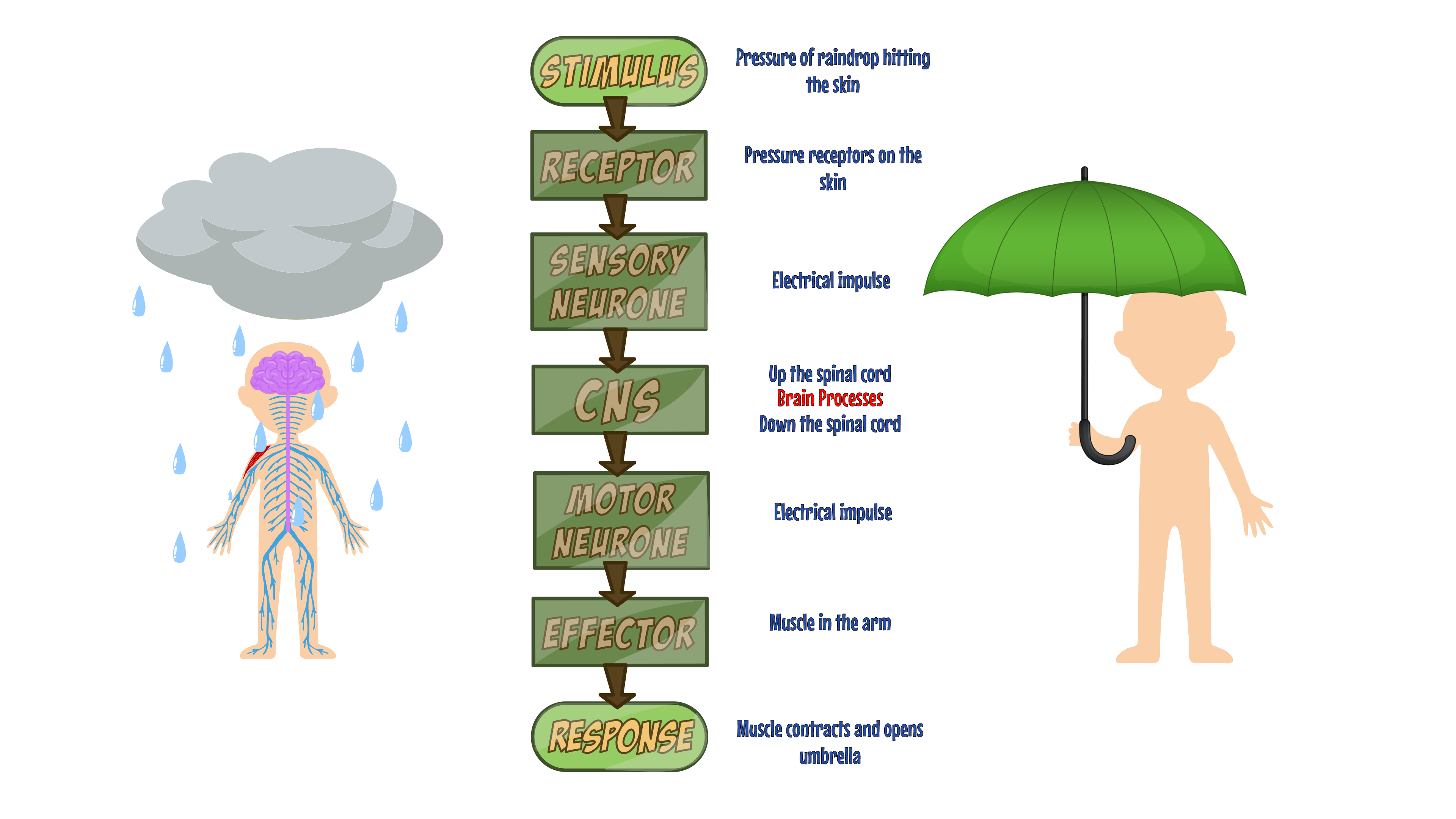
The route that these responses take start with a STIMULUS that is detected by a RECEPTOR.
The receptor transmits electrical signals that travel through the SENSORY NEURONE to the CNS.
Within the CNS the message goes up the spinal cord to the BRAIN where the information is PROCESSED, and a response is sent back as another electrical impulse.
The response then travels through a MOTOR NEURONE and arrives at the EFFECTOR which provides a RESPONSE (contraction or secretion of hormones).
As an example, let’s consider a rain drop landing on a persons skin, resulting in them opening an umbrella:
2. REFLEX RESPONSES
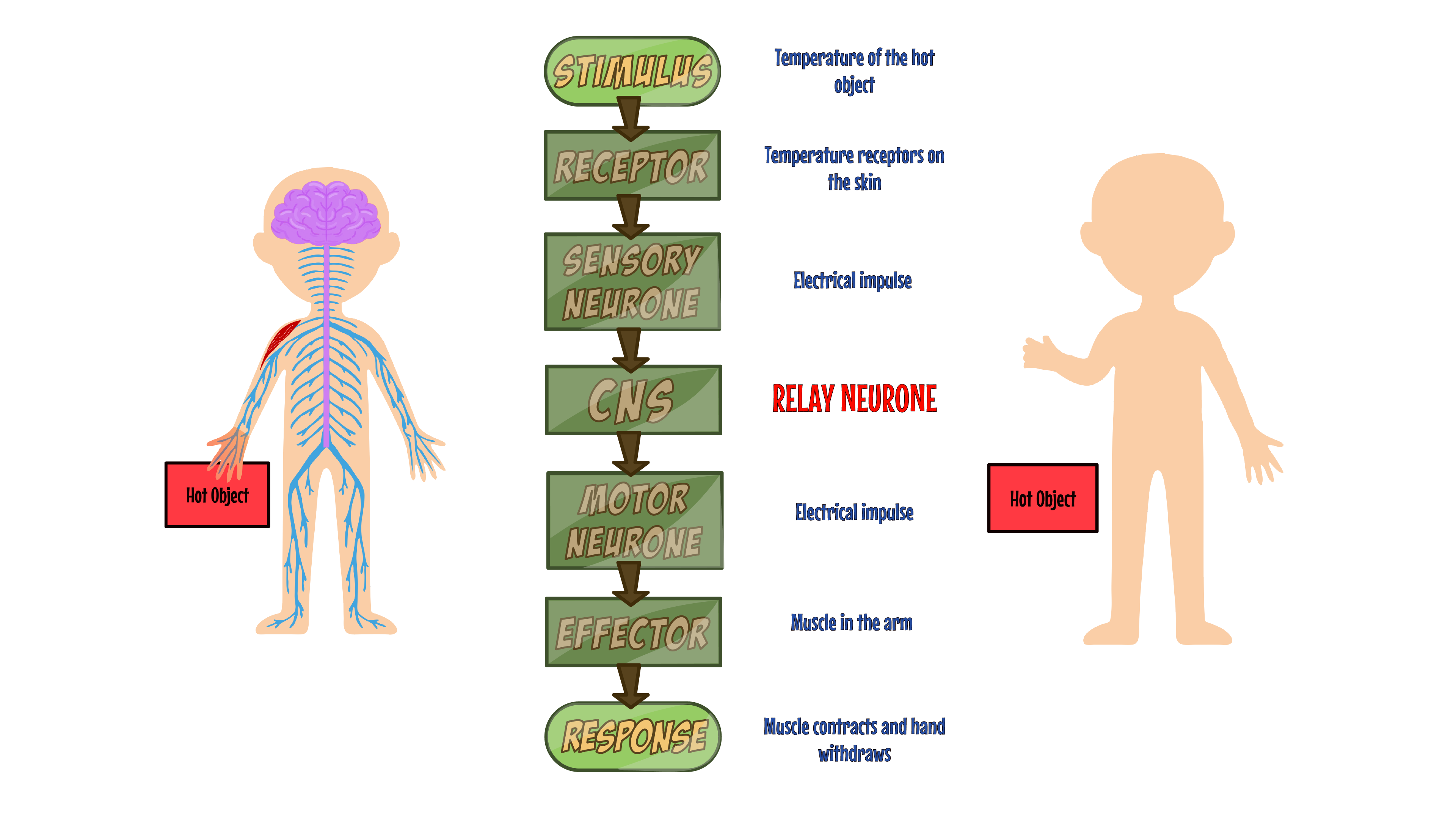
These are AUTOMATIC responses that involve RELAY NEURONES as the COORDINATION CENTRE.
As they do NOT send messages to the brain for processing, they are RAPID and AUTOMATIC, which is useful as their quick nature can protect the body from INJURY.
As and example, let’s consider a person touching a very hot object, resulting in a reflex response where they WITHDRAW their hand.
The ROUTE that the electrical signals take during a reflex response is known as the REFLEX ARC.
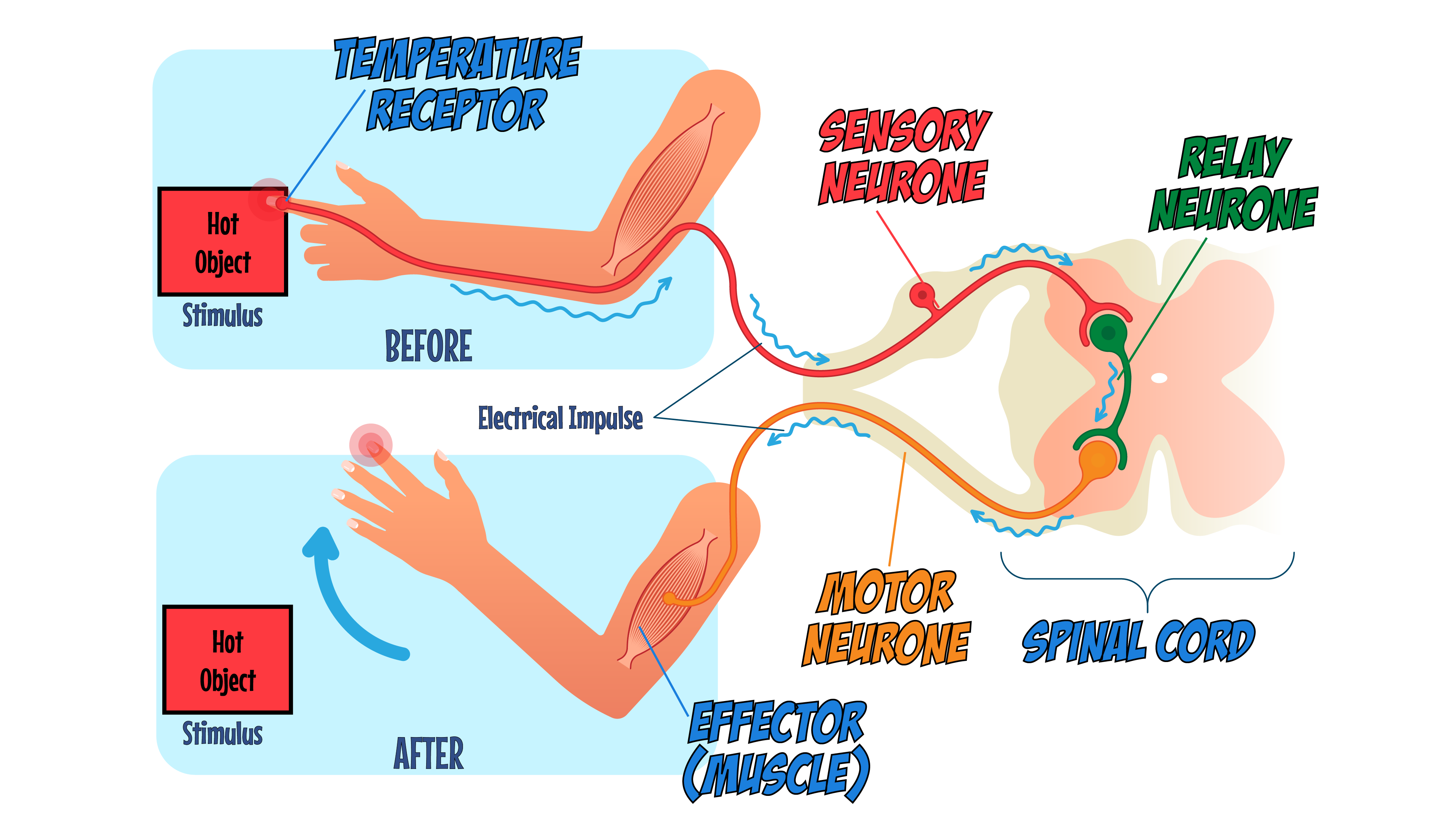
As this is a REFLEX RESPONSE, the person would have withdrawn their hand more RAPIDLY than a voluntary response.
This quick response means the person’s hand spends LESS TIME touching the hot object and therefore REDUCES the burning of the skin.
SYNAPSES
The diagram below shows a more detailed diagram of the REFLEX ARC.
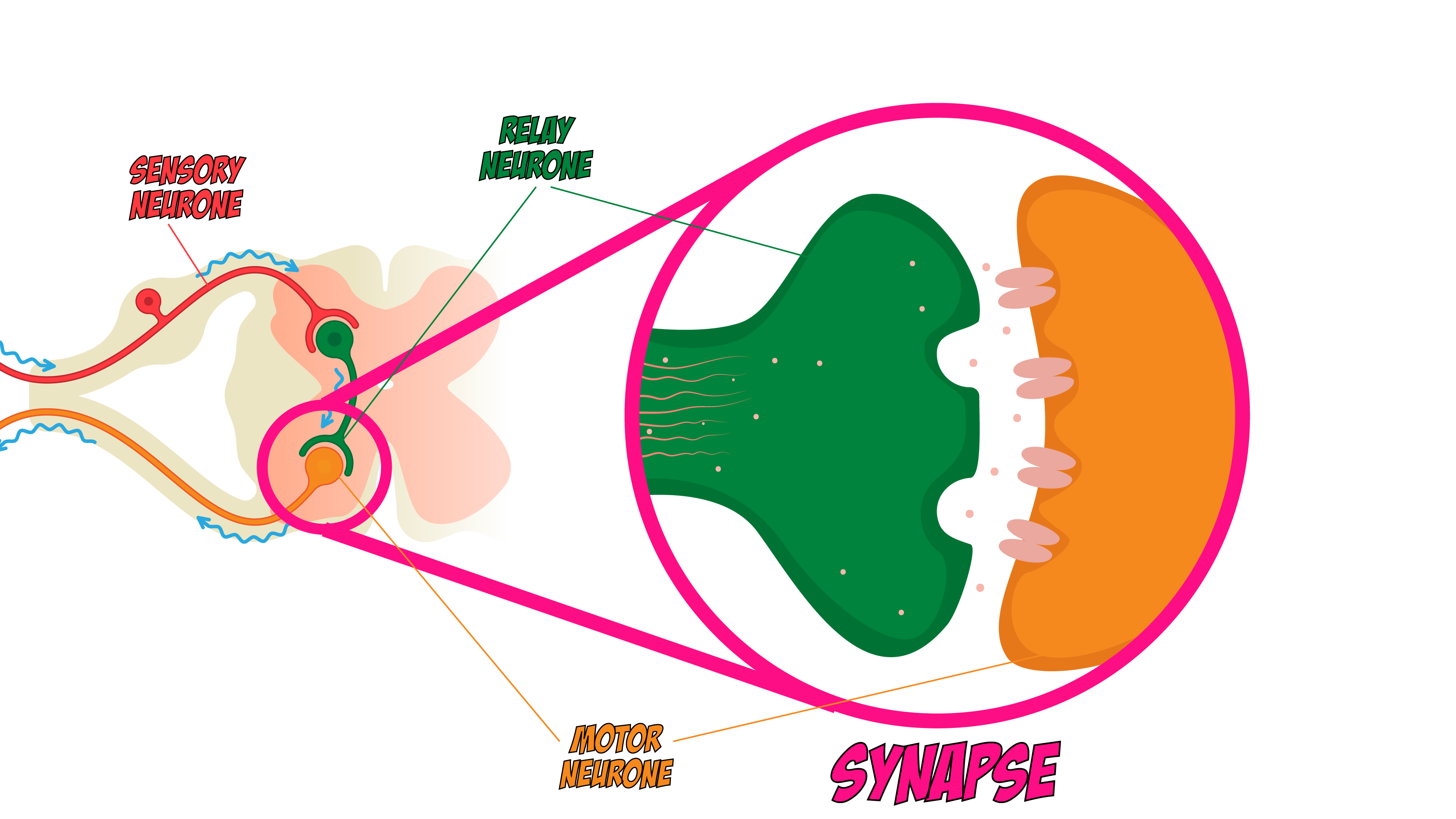
SYNAPSES are connections between neurones which consist of a GAP.
Electrical impulses can NOT pass through the gap, so when an impulse reaches a synapse, it CONVERTS it into a CHEMICAL known as NEUROTRANSMITTER.
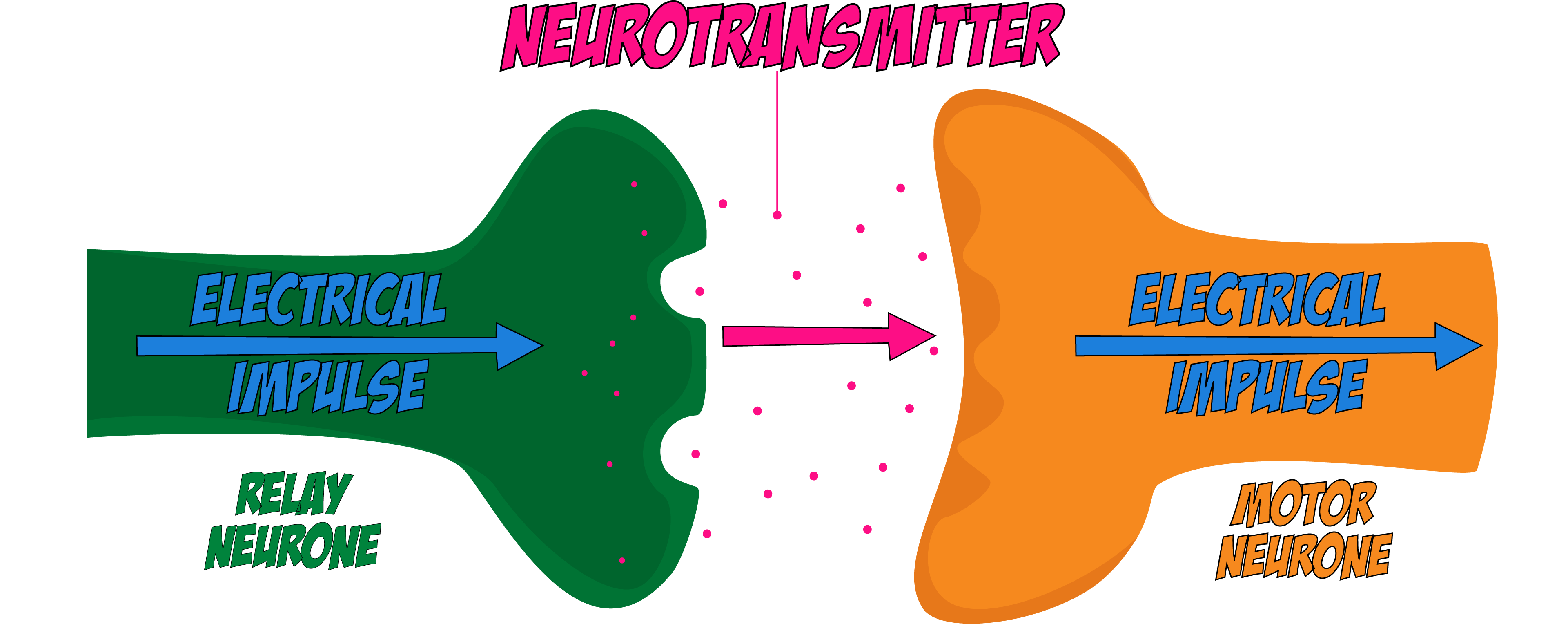
The neurotransmitter DIFFUSES across the gap of the synapses where it picked up by receptors and converted back into an electrical impulse in the next neurone.