
The Rate of Photosynthesis
The RATE OF PHOTOSYNTHESIS can be influenced by three primary factors:
1. LIGHT INTENSITY
2. CARBON DIOXIDE (CO₂) CONCENTRATION
3. TEMPERATURE
Limiting Factors
- At any moment, one of these factors may act as the LIMITING FACTOR, determining the maximum rate of photosynthesis.
- The limiting factor is any factor that STOPS photosynthesis from happening FASTER.
- Here are three examples of limiting factors:
1. On a WARM NIGHT, the limiting factor is LIGHT INTESITY:
Both temperature and CO₂ concentration are high enough but the light intensity needs to be increased to make photosynthesis faster.
2. On a COLD DAY at MIDDAY, the limiting factor is TEMPERATURE:
Both light intensity and CO₂ concentration are high enough but the temperature needs to be increased to make photosynthesis faster.
3. On a WARM DAY at MIDDAY, the limiting factor is CO₂ CONCENTRATION:
Both temperature and light intensity are high enough but the CO₂ concentration needs to be increased to make photosynthesis faster.
Graphs for the Rate of Photosynthesis
When studying photosynthesis, graphs are a crucial tool for visualising how different factors can limit the rate at which plants produce glucose and oxygen.
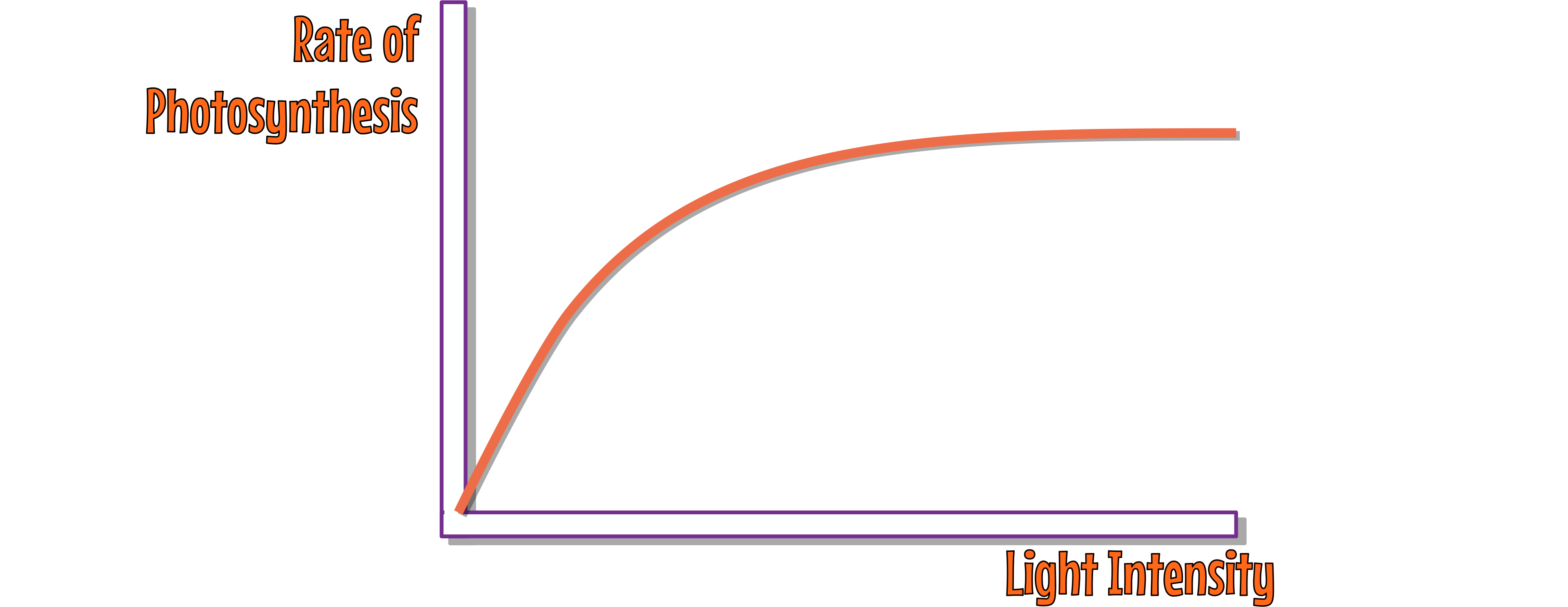
LIGHT INTENSITY Graph:
- This can be represented by a graph that rises steeply before plateauing, forming a curve that eventually flattens out.
- Initially, as light intensity increases, the rate of photosynthesis increases proportionally.
- Beyond a certain point of light intensity, the rate no longer increases, indicating another factor such as CO₂ CONCENTRATION or TEMPERATURE is the LIMITING FACTOR.
CARBON DIOXIDE CONCENTRATION Graph:
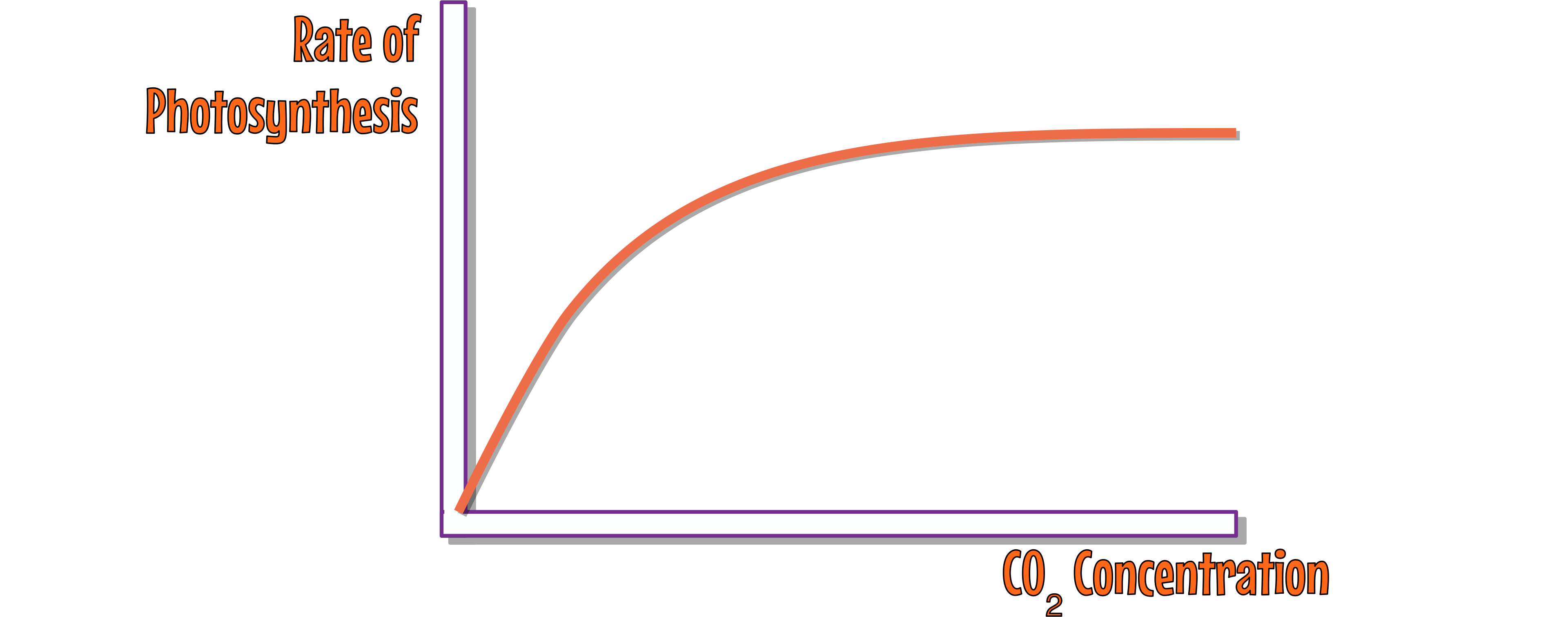
- A graph plotting the rate of photosynthesis against CO₂ concentration also shows a similar initial steep increase.
- As with light intensity, there's a level of CO₂ concentration at which an increase does not further increase the rate of photosynthesis. At this point, either LIGHT INTENSITY OR TEMPERATURE are acting as the LIMITING FACTOR.
TEMPERATURE Graph:
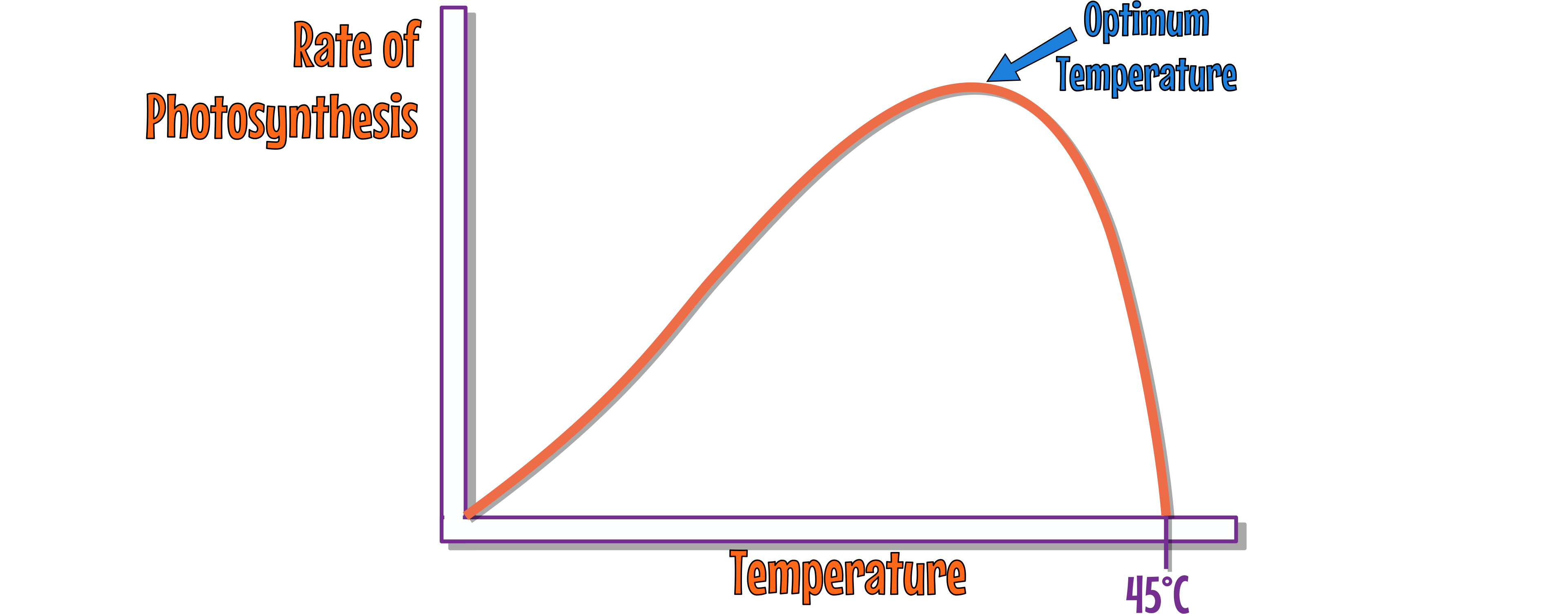
- The rate of photosynthesis increases with temperature due to more COLLISIONS between enzymes and substrates, but this only happens up to a point known as the OPTIMUM TEMPERATURE.
- Beyond this optimal temperature, the rate rapidly declines as enzymes are sensitive to heat and can be DENATURED at high temperatures.
- This graph would typically rise, peak, and then sharply drop off as the temperature moves beyond the enzymes' tolerable range.
FARMING Practices and Controlled Conditions:
- In agriculture, creating optimal conditions for plant growth is vital. GREENHOUSES are used to manipulate environmental factors affecting photosynthesis.
- Greenhouses trap the Sun's HEAT, ensuring temperatures remain within the optimal range for photosynthetic enzymes to function effectively. They also allow for the control of CO₂ levels and light intensity.
- Farmers may use supplemental ARTIFICIAL LIGHT to extend the hours of light, especially during shorter days, and provide consistent light intensity, directly influencing the rate of photosynthesis.
- By monitoring and adjusting heat and light, farmers can prevent temperature and light intensity from becoming limiting factors in plant growth.
- Additional methods include using HEATERS, and VENTILATION to manage temperature, and using fertilizers to supply necessary nutrients, further optimizing the conditions for photosynthesis.

Economic Considerations in Farming:
- While creating these ideal conditions is EXPENSIVE, the INCREASE in plant GROWTH and YIELD can lead to MORE PROFIT which offsets these expenses.
- It is crucial that farmers balance the cost of creating these conditions with the benefits gained in crop yield and quality to ensure they don't lose out on money.