Detection and Identification of Plant Diseases:
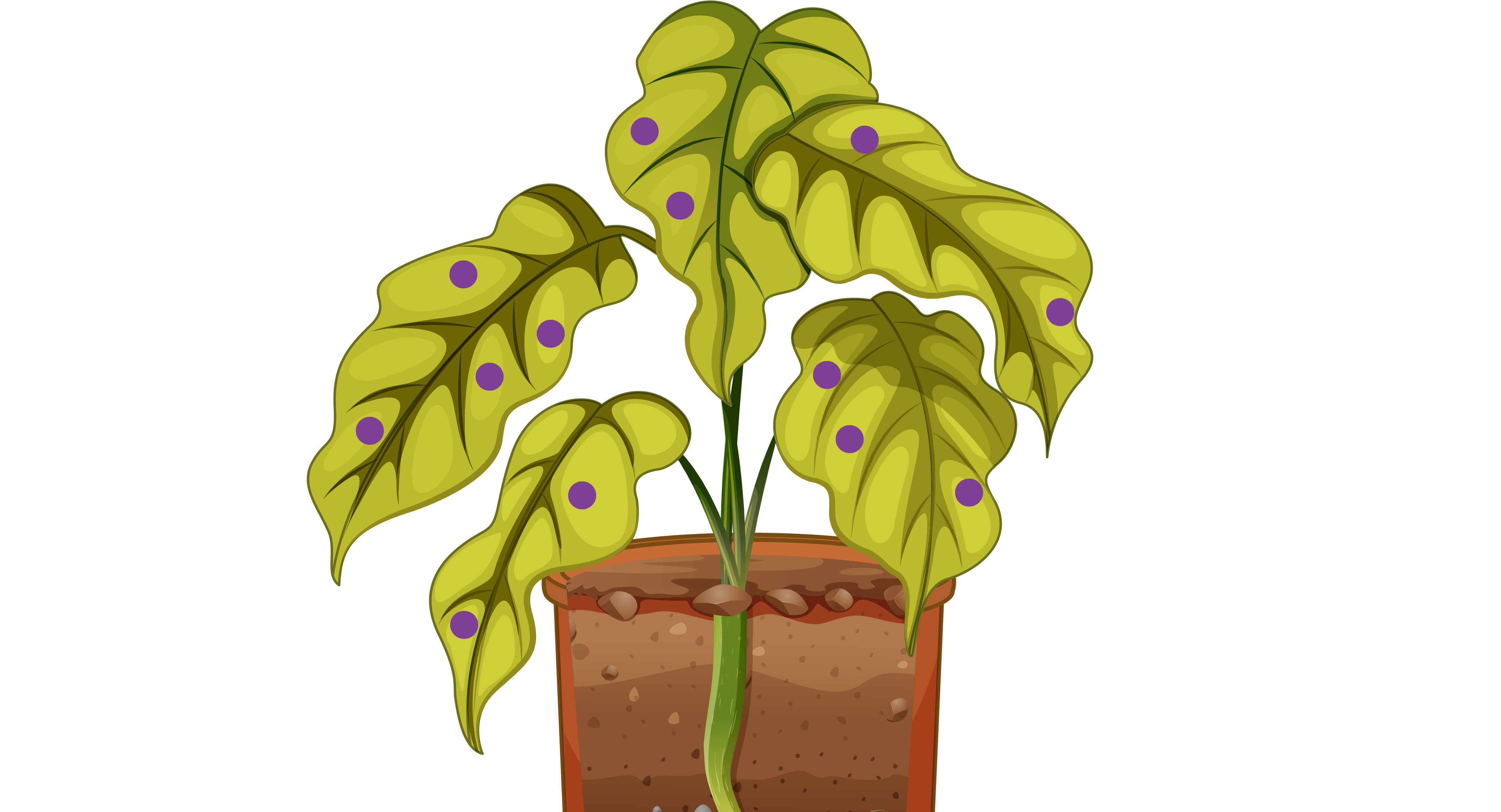
Just like animals, PLANTS can also get viral, bacterial and fungal DISEASES as well as by insects. The common signs of a plant with a disease are:
- STUNTED GROWTH
- SPOTS ON LEAVES
- AREAS OF DECAY (ROT)
- ABNORMAL GROWTHS (LUMPS)
- MALFORMED STEMS OR LEAVES
- DISCOLOURATION
- PRESENCE OF PESTS (such as aphids)
Different plant disease have different symptoms, so the disease can be identified by:
• Looking up the sign on a gardening MANUAL or WEBSITE.
• Taking the infected plants to a LABORATORY to identify the pathogen.
• Using testing kits that contain MONOCLONAL ANTIBODIES.
Ion Deficiency in Plants
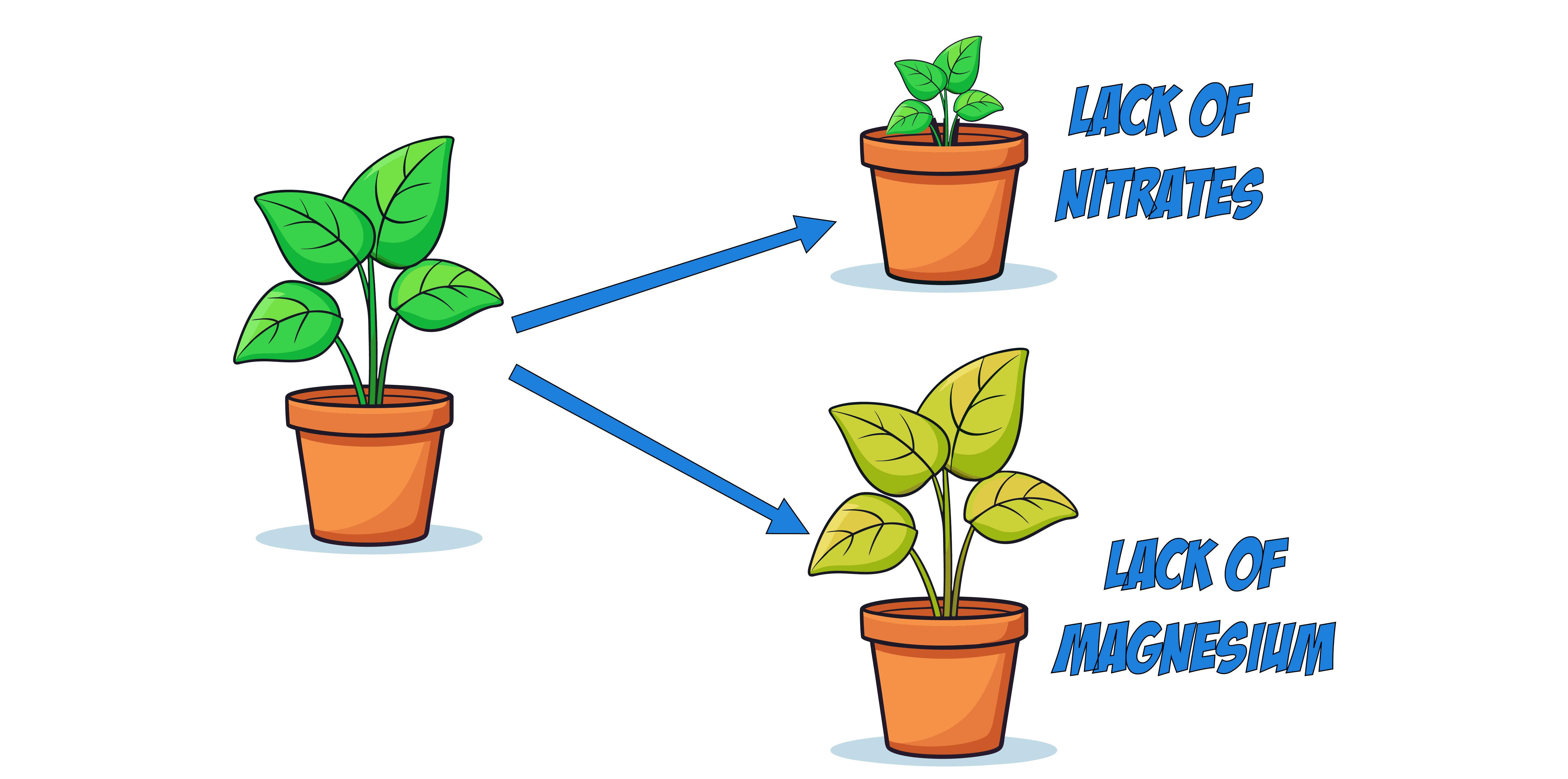
Plants need the correct amounts of different ions in order to stay healthy. A lack of these ions can lead to ION DEFICIENCY CONDITIONS such as:
- NITRATE IONS: These are needed for PROTEIN SYNTHESIS, and help the plant to GROW. A lack of nitrate ions can lead to STUNTED GROWTH.
- MAGNESIUM IONS: These are need to make CHLOROPHYLL. A lack of chlorophyll can lead to CHLOROSIS which leads to YELLOW LEAVES meaning the plants can't PHOTOSYNTHESISE.