
MONOCLONAL ANTIBODIES can be designed to bind to specific ANTIGENS found on cells, allowing them to target specific cells in the body.
1. Pregnancy Tests
A hormone called HCG is found in the urine of women ONLY when they are PREGNANT.
Monoclonal antibodies in PREGNANCY TESTS can be used detect the presence of the hormone HCG in a woman's urine.
There are 4 parts in a pregnany test
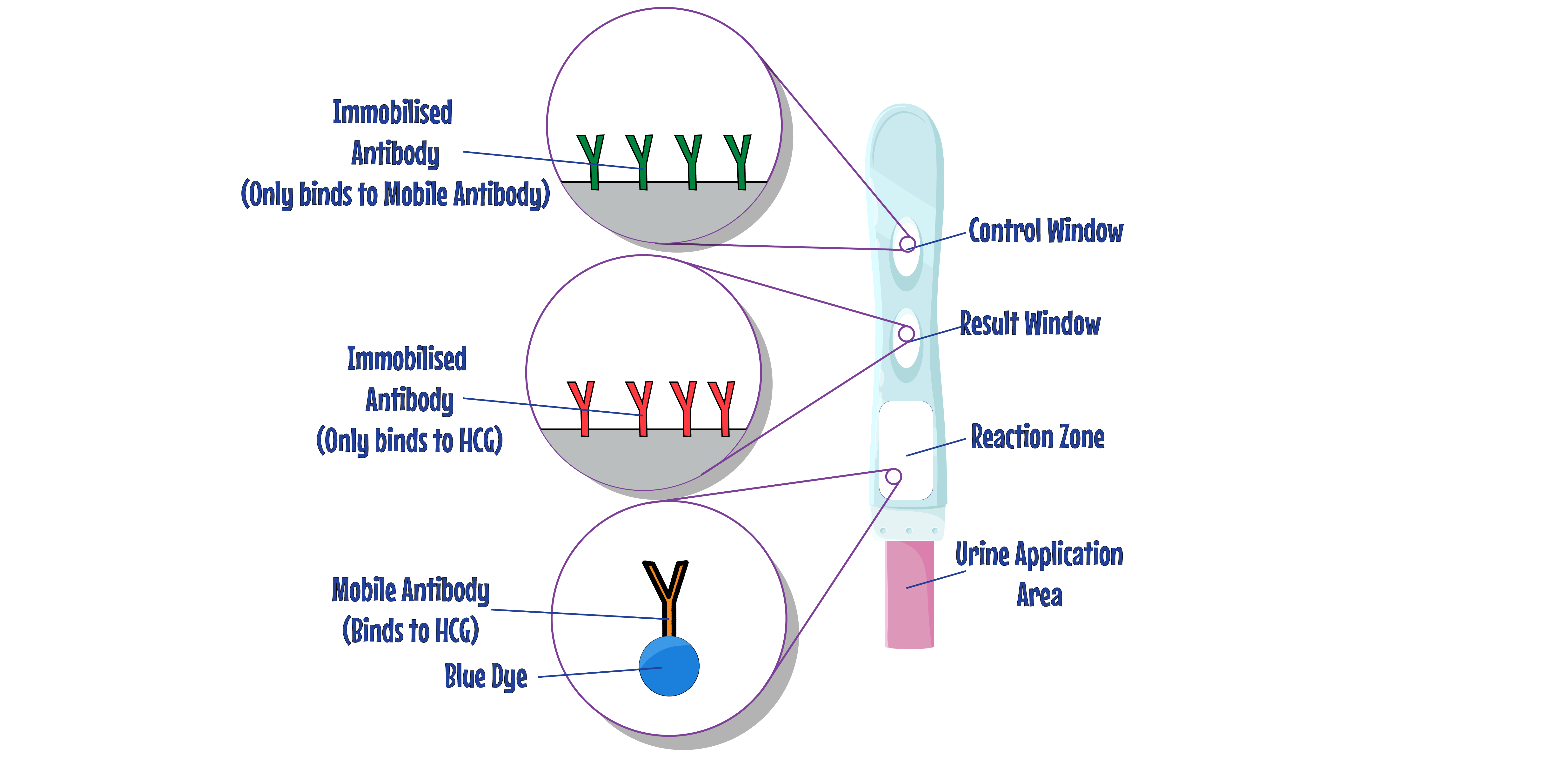
1. URINE APPLICATION AREA: This is where the urine is applied to begin the test.
2. REACTION ZONE: Contains MOBILE antibodies specific to HCG with a BLUE DYE attached. These antibodies can MOVE up with the urine.
3. RESULT WINDOW: Contains IMMOBILISED antibodies specific to HCG. These antibodies can bind to HCG molecules but can NOT move. This is where the results will be displayed.
4. CONTROL WINDOW: Also contains IMMOBILISED antibodies that are specific to the MOBILE antibodies from the reaction zone. This section confirms that the test is working correctly.
How the Test Works:
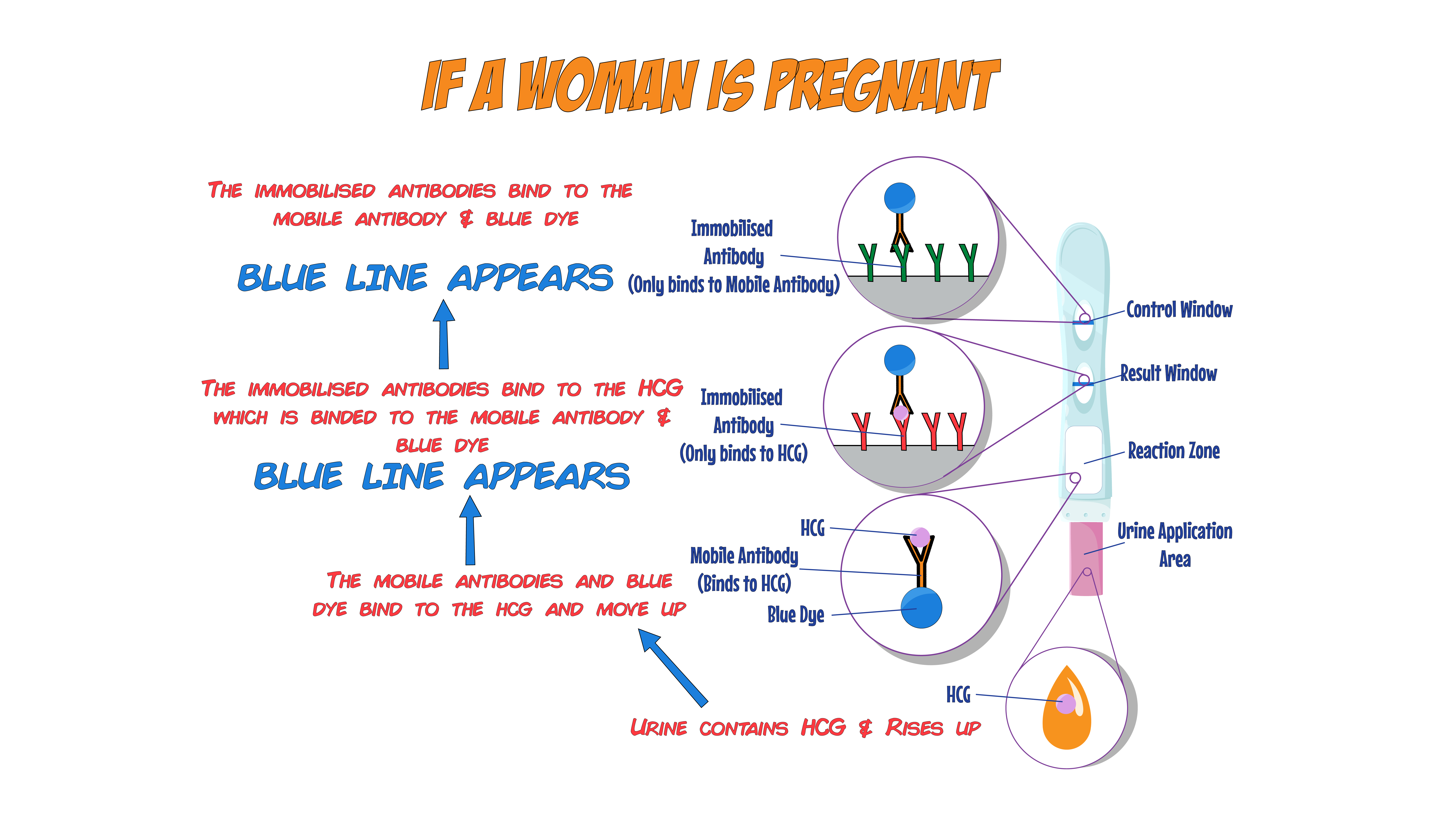
When urine is applied, it travels UP the test strip, carrying the MOBILE ANTIBODIES.
If HCG is present in the urine, it will BIND to the MOBILE antibodies (containing a blue dye), which then BIND to the IMMOBILISED antibodies in the RESULTS window.
This causes the window to appear blue, that indicates a positive result.
Regardless of HCG presence, the mobile antibodies will reach the control window and bind to the antibodies there, confirming the test has worked properly by changing colour.
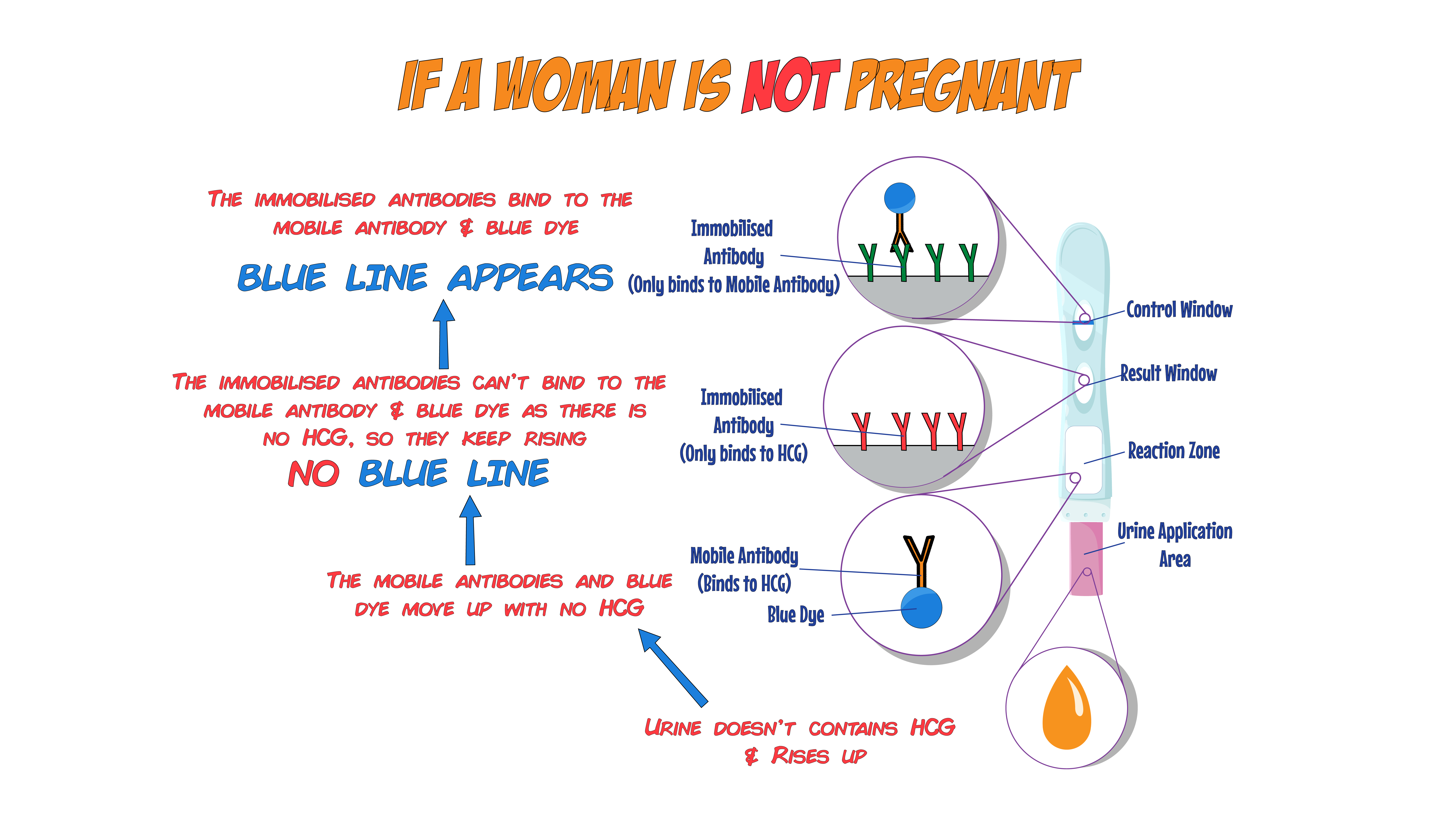
If HCG is NOT present, it would NOT bind to the mobile antibodies (containing a blue dye), which means it will NOT bind to the immobilised antibodies in the results window.
The mobile antibodies will carry on rising up and the RESULTS window will NOT appear blue.
The CONTROL window however will still turn blue as it binds to the mobile antibodies (containing blue dye) even if there is NO HCG.
2. Diagnosing and Treating Cancer
CANCER CELLS have specific proteins on their surfaces called TUMOUR MARKERS that are not found on normal cells.
MONOCLONAL ANTIBODIES can be designed in the lab to bind to these TUMOUR MARKERS, helping to diagnose and treat cancer effectively.

The MONOCLONAL ANTIBODIES can be bound to a FLUORESCENT DYE so that when they attach onto the tumour marker of a cancer cell, they are easy to IDENTIFY and this helps doctors determine the location, size, and spread of the cancer.
This method can also be used to measure levels of hormones, chemicals and even pathogens in the blood.
To TREAT CANCER the MONOCLONAL ANTIBODIES can also be bound to a radioactive substance, a toxic drug or a chemical. These substances STOPS cells from growing and dividing.
As they only target the CANCER CELL, the healthy cells are not affected. This helps to minimise SIDE EFFECTS when compared to other cancer treatments.
Disadvantages of Monoclonal Antibodies
While monoclonal antibodies are a powerful tool for targeting specific cells, they can cause significant SIDE EFFECTS such as fever, vomiting, and low blood pressure
These side effects were found to be MORE EXTREME than initially expected when they were first developed, which has meant they are NOT yet as widely used as everyone hoped for.