Vaccination
VACCINATION is a proactive approach to prevent diseases rather than treating them after infection.
How VACCINATIONS Work:
- VACCINATIONS work by introducing DEAD or INACTIVE pathogens into the body.
- These pathogens carry ANTIGENS which prompt the LYMPHOCYTES (white blood cells) to produce ANTIBODIES without the actual disease occurring.
- The lymphocytes stay in the body as MEMORY CELLS, so if the actual pathogen was to ever enter the body, they would RAPIDLY produce a LARGE VOLUME of antibodies to eradicate the pathogens and prevent illness.
- The MMR VACCINE is an example that combines weakened versions of the viruses causing measles, mumps, and rubella.
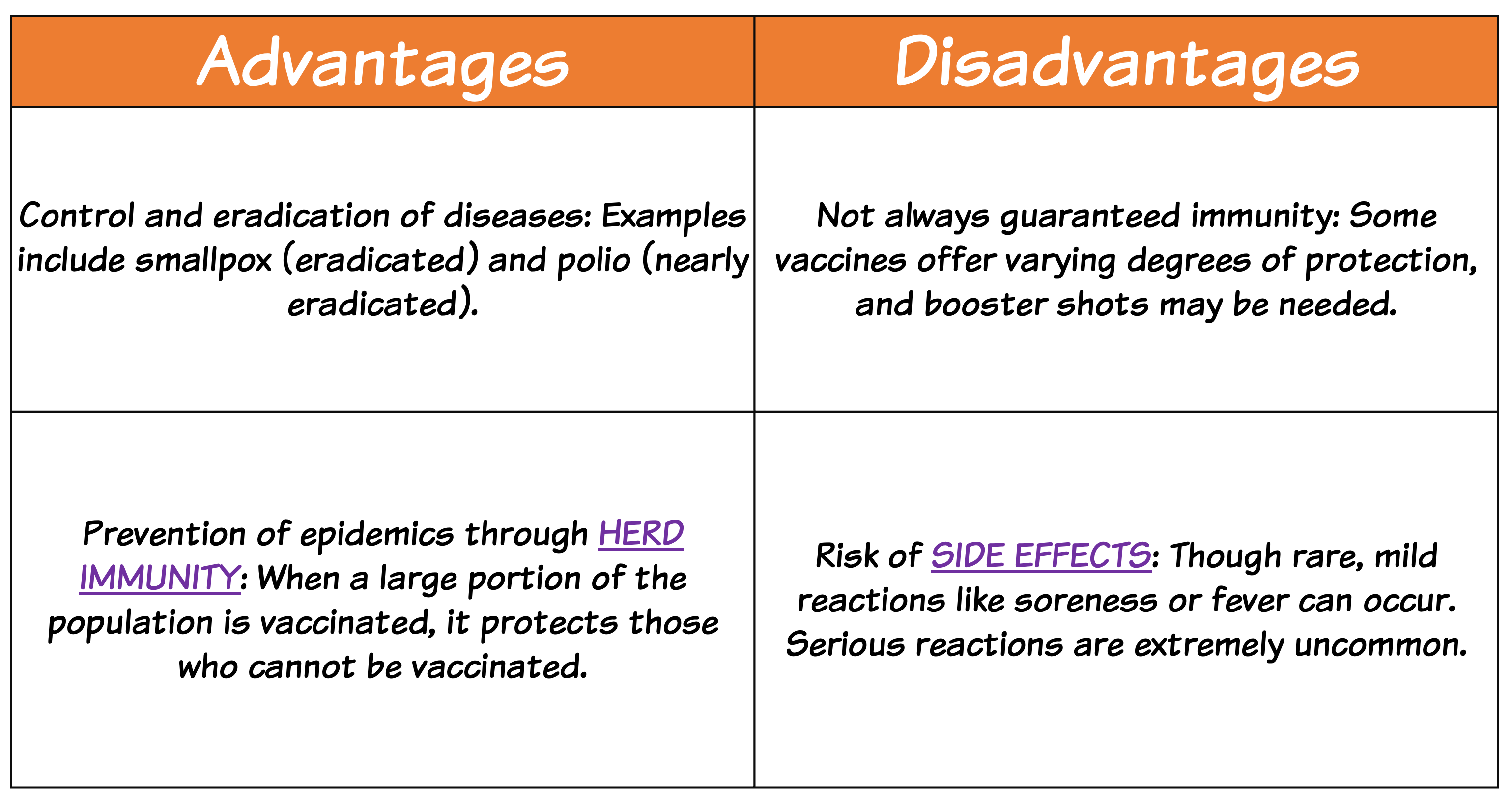
There are advantages and disadvantages to vaccinations: