
Plant Organ Systems
The roots, stem and leaves form a plant organ system for TRANSPORT OF SUBSTANCES around the plant. Here are examples of different structures within plants and how they're adapted to perform their functions:
1. Phloem Tubes
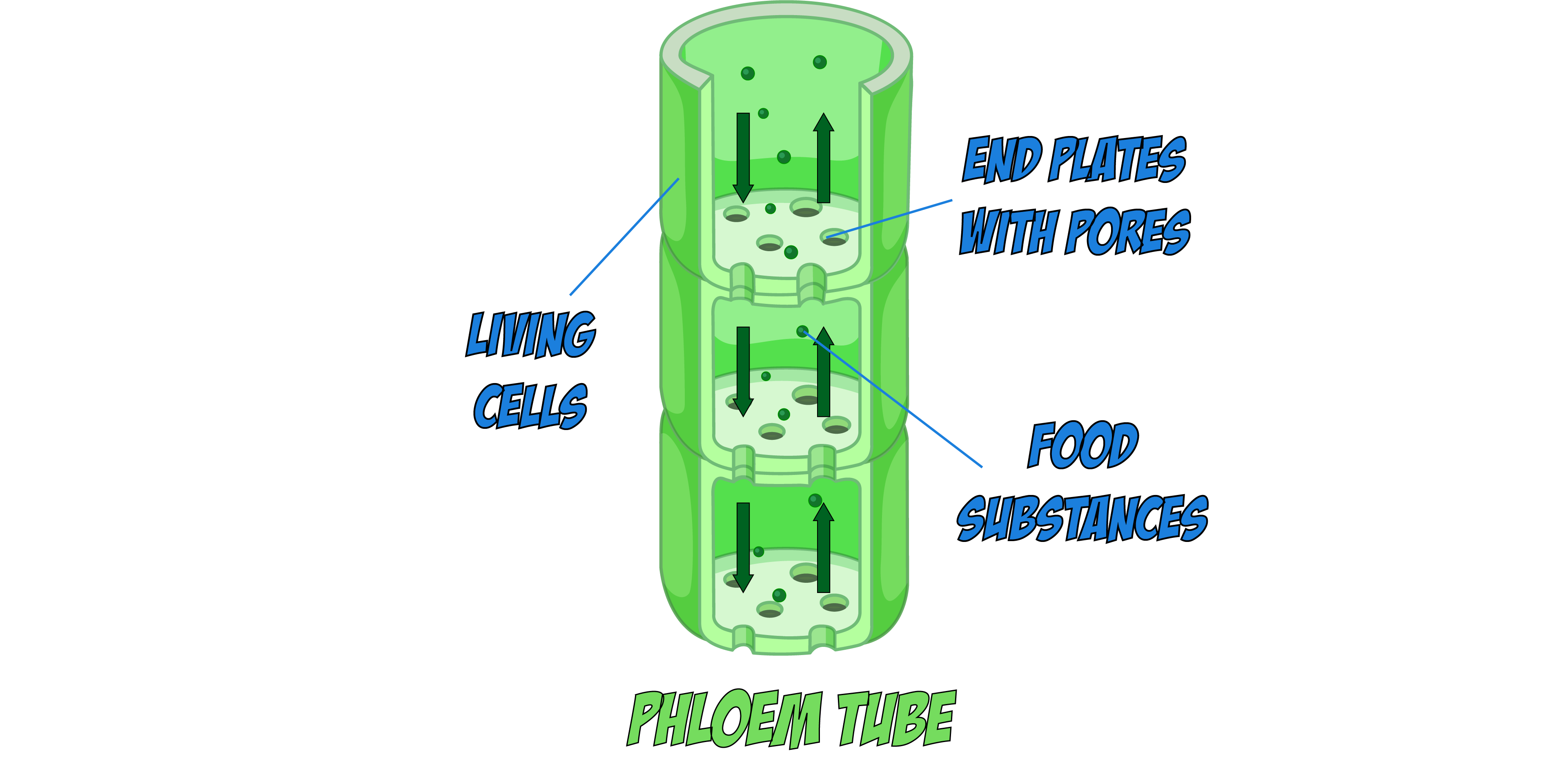
- Transports SUGAR and other FOOD SUBSTANCES in the form of CELL SAP around the plant.
- They are made of ELONGATED LIVING CELLS that are joined together to create a continuous tube.
- Cell sap can move from one phloem cell to the next through PORES in the end walls.
- The sugar and nutrients can travel in BOTH DIRECTIONS of the phloem.
- The process where sugar and nutrients move through the phloem is called TRANSLOCATION.
2. Xylem Tubes
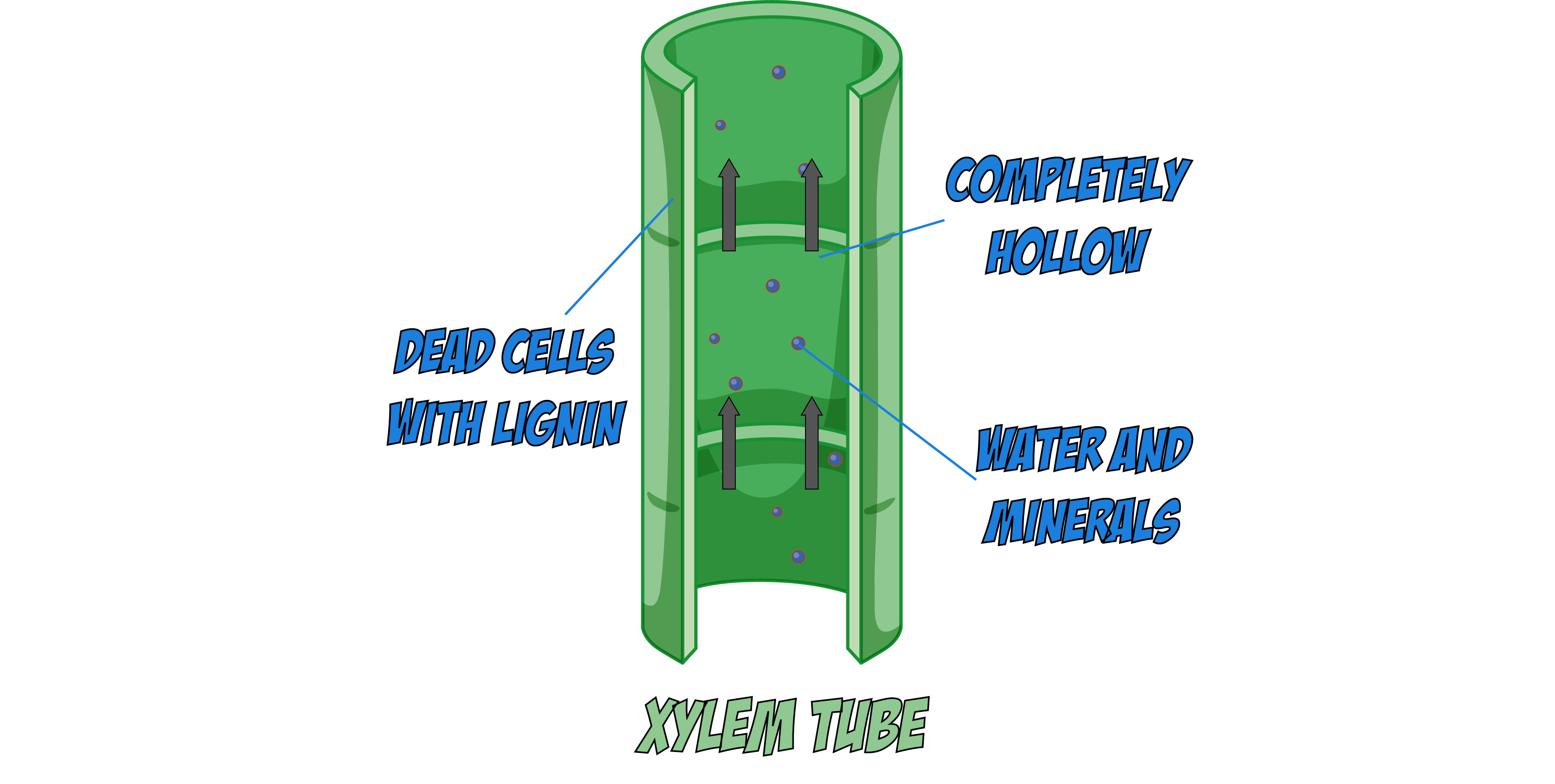
- Transports WATER and MINERALS from the roots to the leaves.
- They are made of DEAD CELLS that form continuous tubes and are strengthened by a substance known as LIGNIN.
- The xylem is completely HOLLOW
- The water and minerals can only move in ONE DIRECTION up the plant from the roots to the leaves.
- The route that the xylem takes is known as the TRANSPIRATION STREAM.
3. Root Hair Cells:

- Found in the ROOTS and are specialised for ABSORBING WATER AND MINERALS.
- Water is taken in by OSMOSIS and minerals are taken in by ACTIVE TRANSPORT.
- They grow long "hairs" to INCREASE SURFACE AREA for absorption from the soil.
4. Stomata
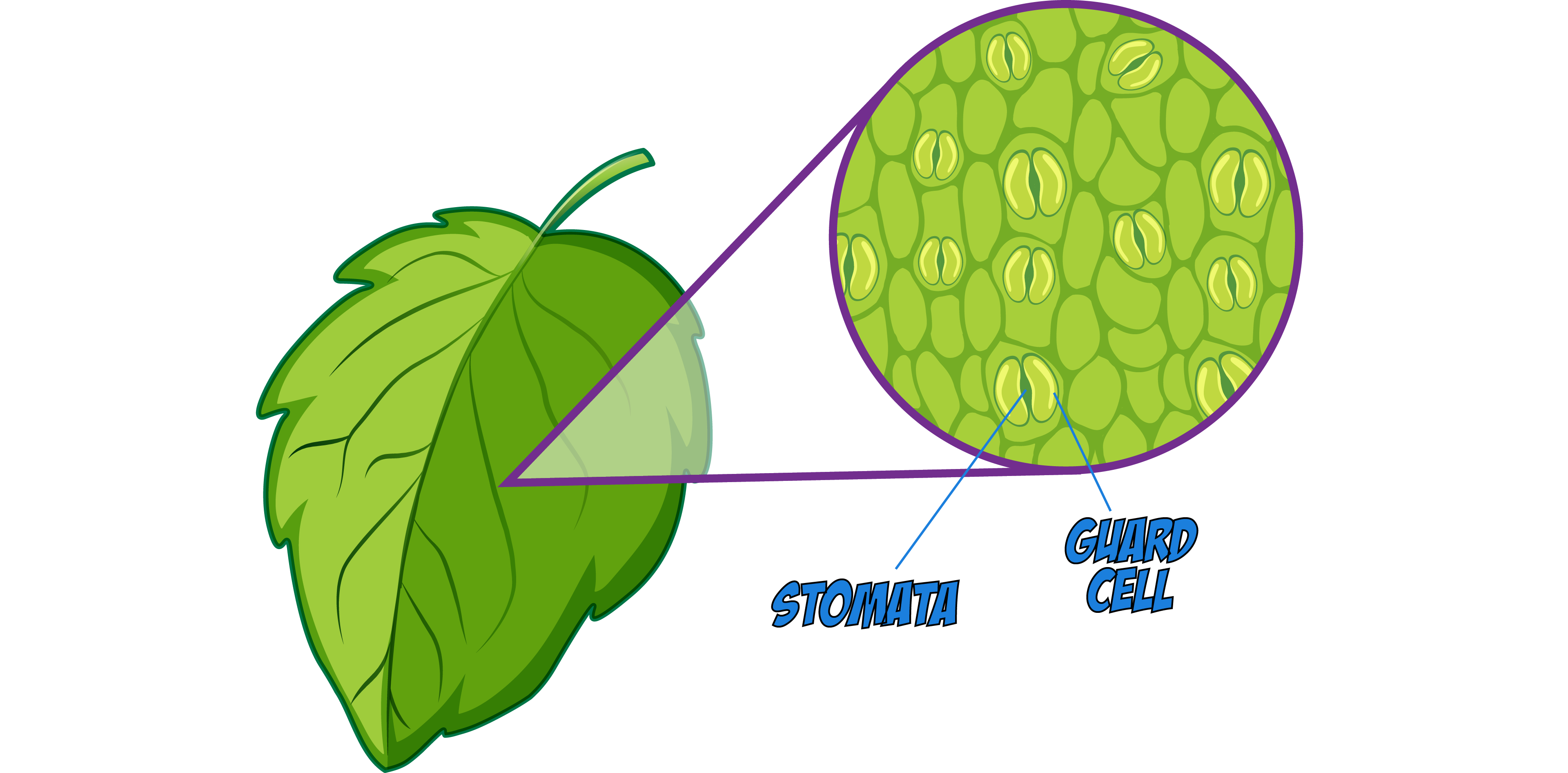
Stomata are small openings on the underside of leaves, regulated by GUARD CELLS:
- In the day time when light intensity is HIGH, the guard cells become TURGID (full of water) and they OPEN the stomata. This is because more PHOTOSYNTHESIS occurs in the daytime which means more CARBON DIOXIDE needs to be taken in. This also results in the release of more WATER and OXYGEN.
- In the night time, the light intesity is LOW and the guard cells become FLACCID (less water). This means the stomata CLOSE as less PHOTOSYNTHESIS occurs. This prevents the loss of excess WATER.
Transpiration
- TRANSPIRATION is caused by the EVAPORATION and DIFFUSION of water from the plant's surface, primarily the leaves.
- Most of the transpiration in a plant occurs through the STOMATA; small PORES found on the bottom of leaves.
- This process helps draw water up from the roots through the xylem and is a key part of the plant's WATER MANAGEMENT and NUTRIENT DISTRIBUTION
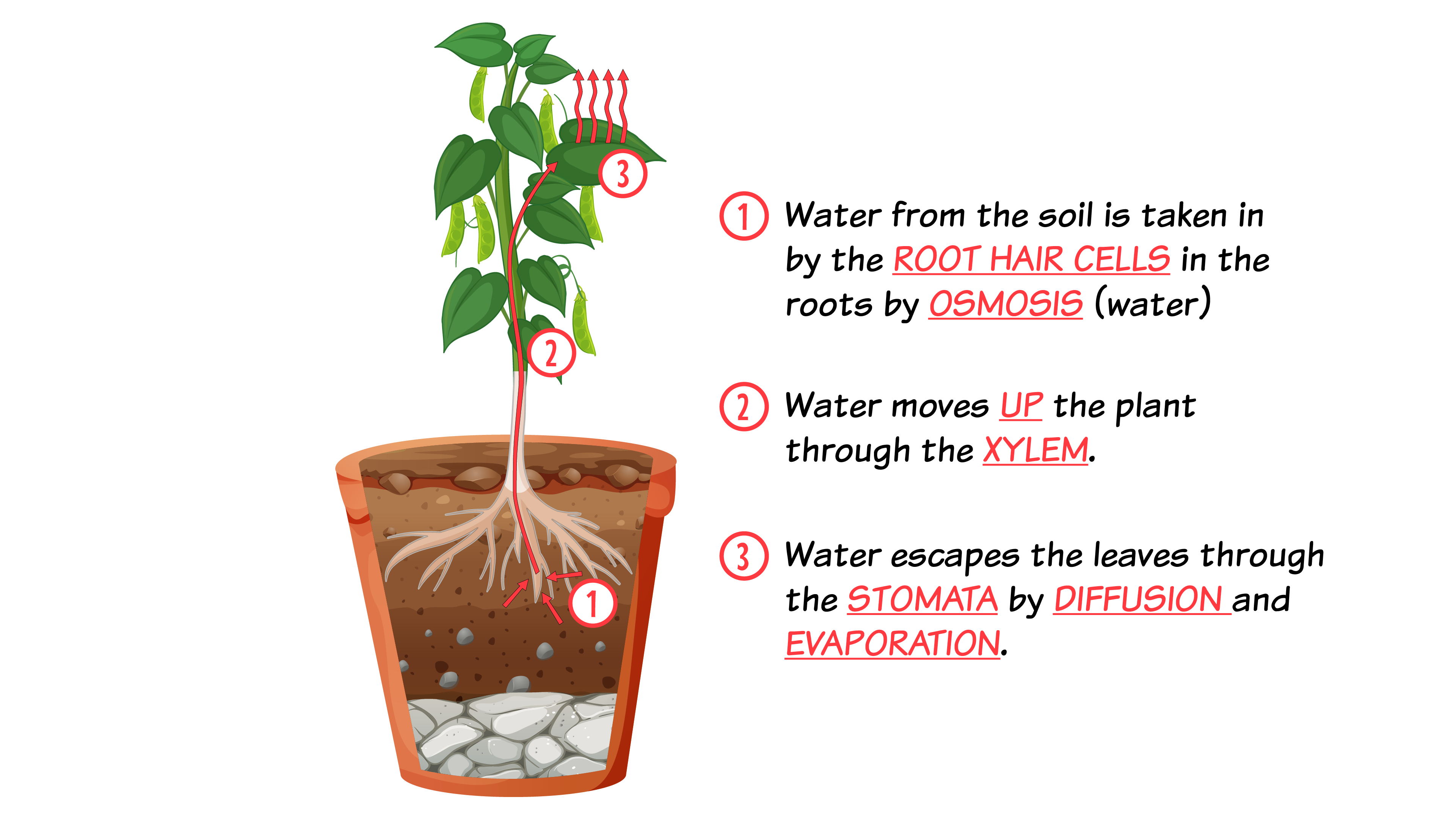
Transpiration rate, the movement of water within plants, is influenced by FOUR different factors:
1. LIGHT INTENSITY:
More light INCREASES transpiration. This is because the STOMATA OPEN UP in bright conditions to allow more gas exchange for photosynthesis.
2.TEMPERATURE:
Higher temperatures INCREASE transpiration because they increase the energy of the water molecules, and makes them move FASTER. This means the rate of DIFFUSION and EVAPORATION of the water molecules out of the stomata increases.
3. AIR FLOW:
Good air circulation around a leaf INCREASES transpiration. This is because the air removes water vapour from the surface of the leaf and keeps the concentration of water outside lower than the inside. This increase in CONCENTRATION GRADIENT makes DIFFUSION faster.
4. HUMIDITY:
Higher humidity levels outside the leaf DECREASES transpiration. This is because it means there is a high water concentration OUTSIDE the leaf, which results in a LOW CONCENTRATION GRADIENT which results in slower DIFFUSION.
Measuring the Rate of Transpiration
Setting Up the Experiment
- Use a POTOMETER to measure water uptake.
- Fill the potometer with water, ensuring no air bubbles are in the tube when inserting the plant.
- Mark the STARTING POSITION of an air bubble in the capillary tube.
- Begin the experiment by starting a stopwatch to measure time.
- Note the DISTANCE MOVED by the air bubble over a set period, such as an hour, to calculate the rate of water uptake.
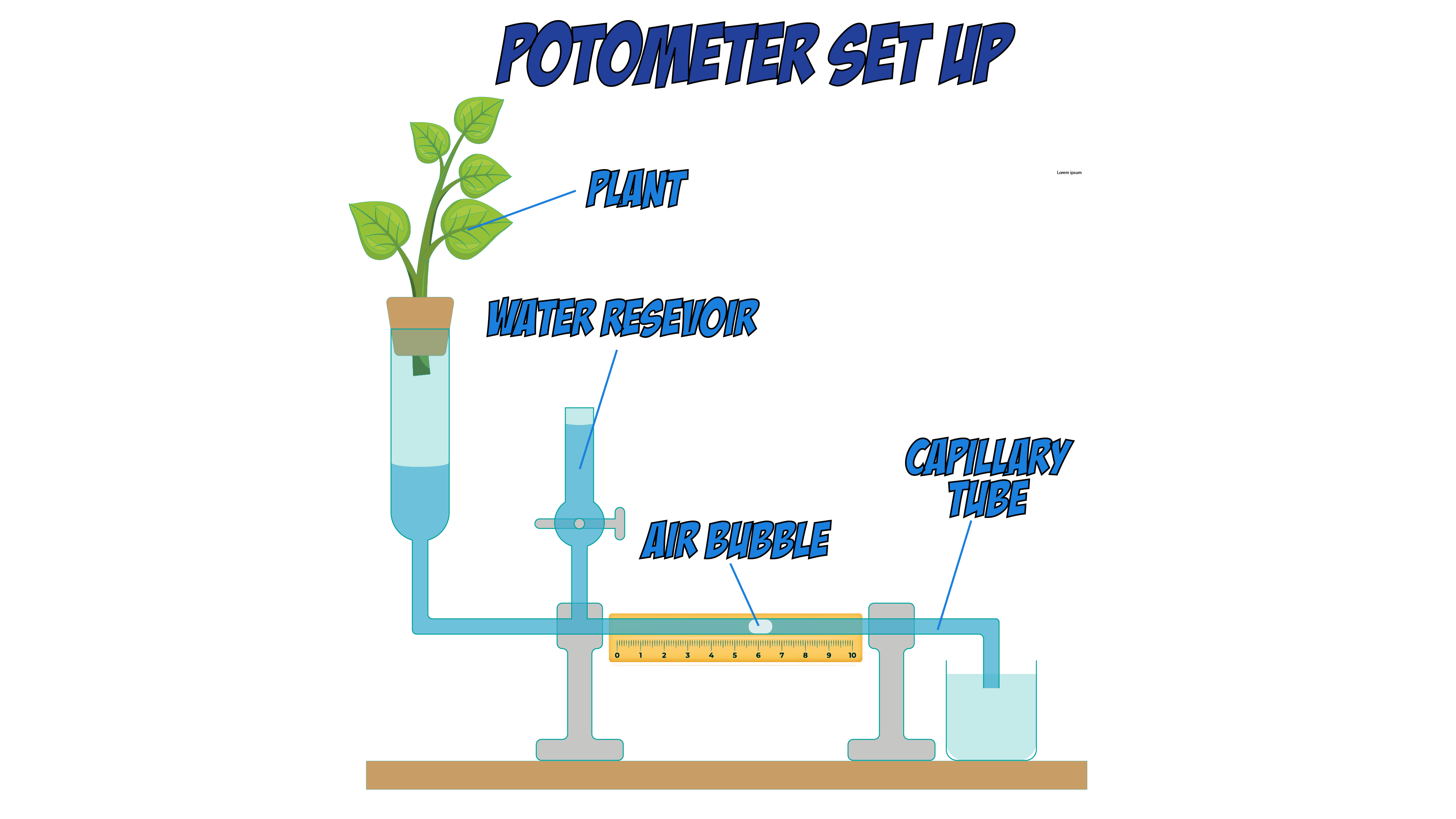
You can estimate the rate of transpiration by measuring the how much water is taken up by a plant. This is because you can assume that water uptake by the plant is directly related to water loss by the leaves.
Reading the Results
The GREATER the distance that the air bubble moves in a period of time, the FASTER the rate of transpiration. Record this distance at regular intervals to calculate the rate.
"