
Enzymes
Role and Function of Enzymes
- Enzymes are BIOLOGICAL CATALYSTS—they speed up reactions without being consumed or altered.
- ENZYMES are produced by living organisms to regulate chemical reactions.
Structure of Enzymes
- Enzymes are large PROTEINS composed of amino acid chains.
- These proteins fold into UNIQUE SHAPES that are crucial for their function.
How Enzymes Work
Lock and Key Mechanism
- Each enzyme has an ACTIVE SITE with a shape that fits substances known as SUBSTRATES.
- Enzymes are SPECIFIC which means one type of enzyme will only fit one type of substrate.

- When the substrate binds to the active site, it BREAKS UP to form the products
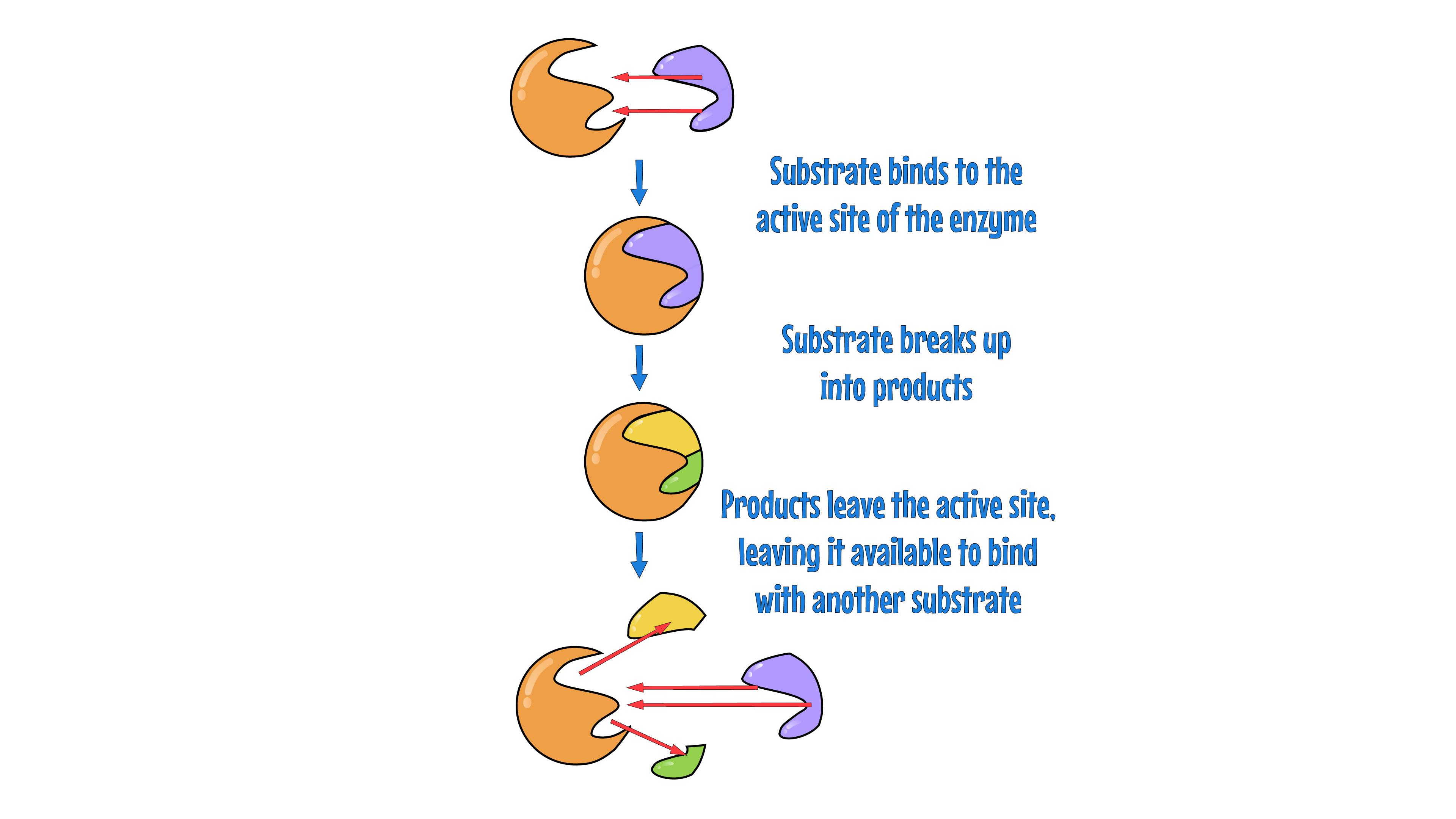
- This specificity means that enzymes catalyse one particular reaction, ensuring precision in biological processes.
- The concept of the 'LOCK AND KEY' model explains this specificity, although the more accurate 'INDUCED FIT' model acknowledges that the enzyme's active site changes slightly to secure the substrate.
Factors Affecting Enzyme Activity
Temperature
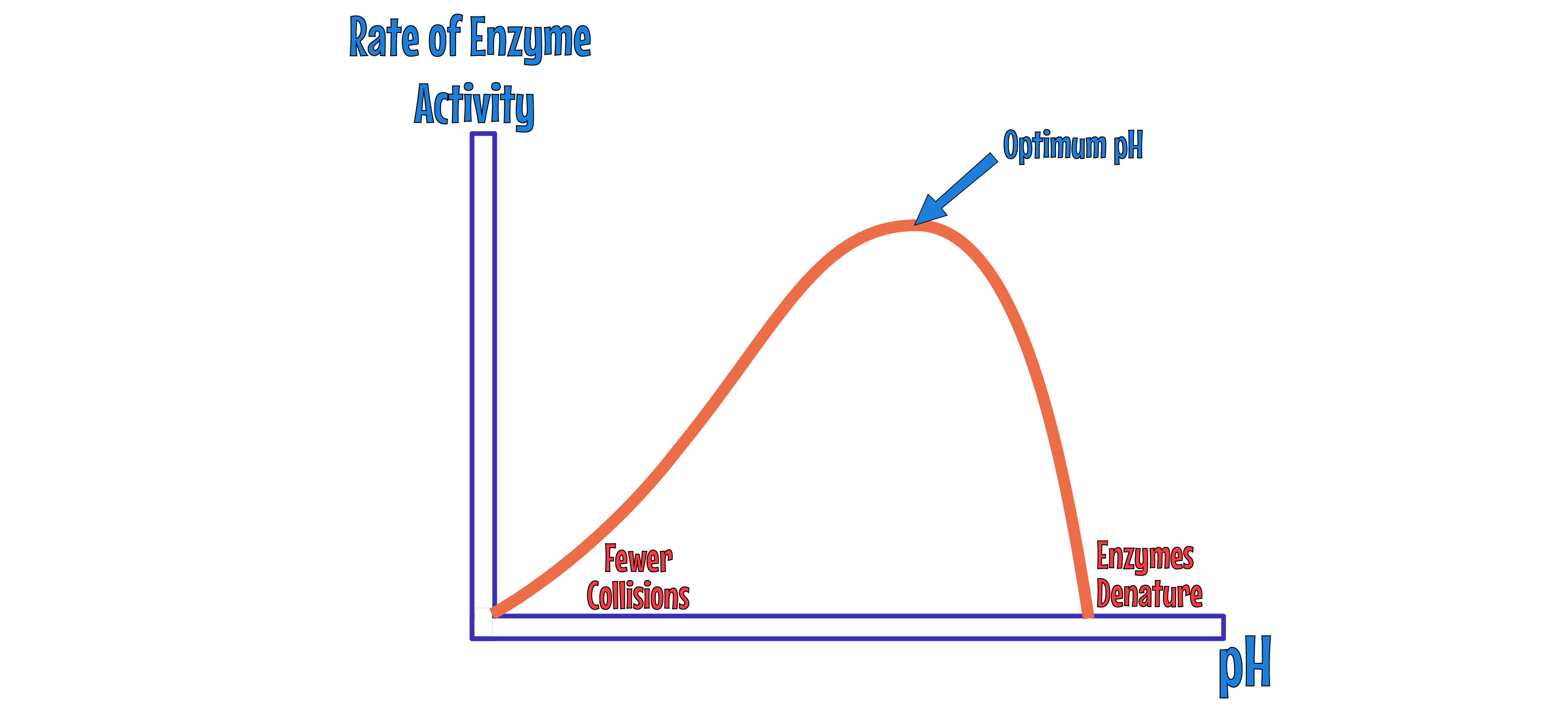
- As you increase the temperature, the rate at which the enzyme controlled reactions occur also increase up to a certain point.
- This is because the enzyme and substrates move around faster meaning there are MORE COLLISIONS per second.
- The rate is the fastest at the OPTIMUM TEMPERATURE.
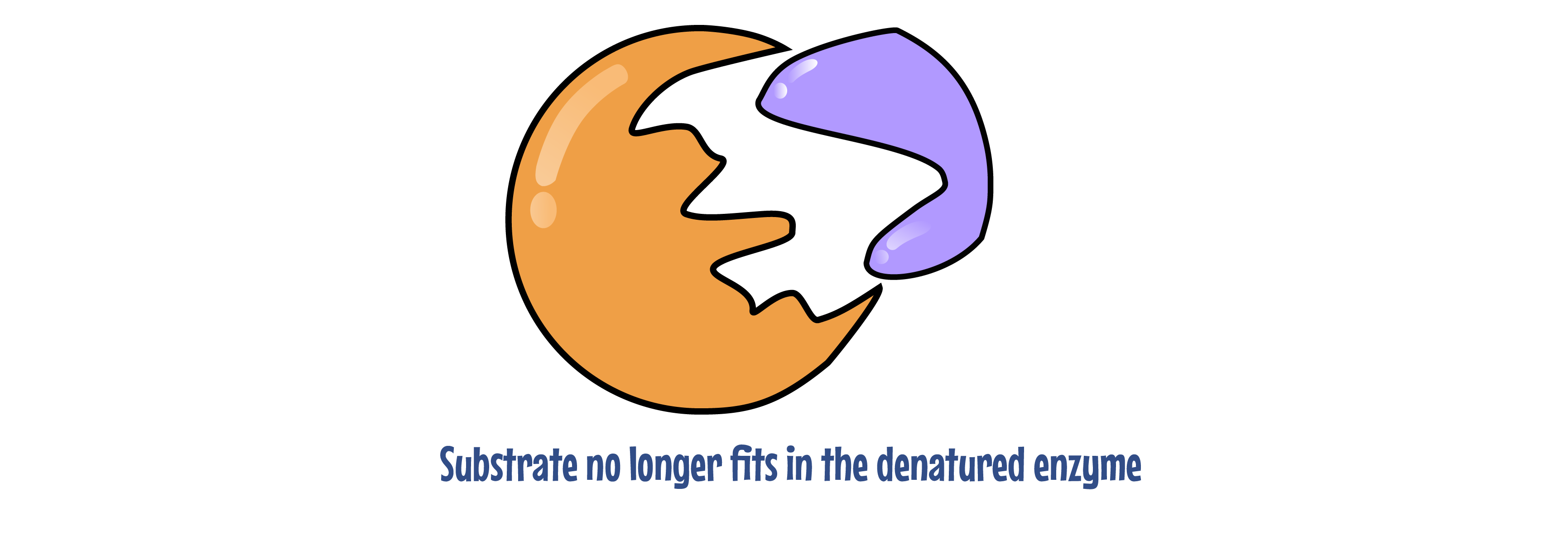
- As the temperature increases past the optimum, the rate DECREASES. This is because the enzymes DENATURE causing the active site to change shape.
pH
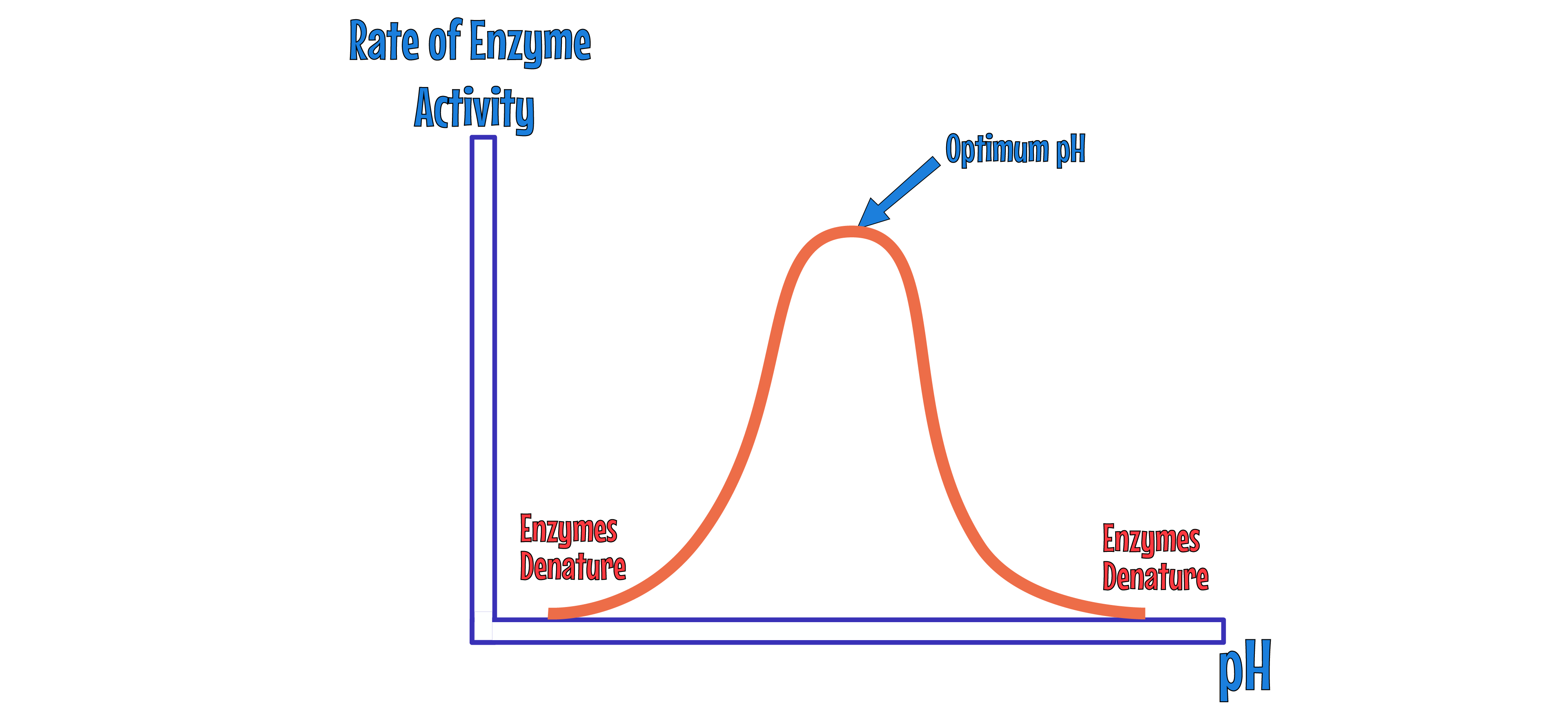
- All enzymes have an OPTIMUM pH that they work the best in
- As the pH increases or decreases from the optimum, the rate of reaction DECREASES. This is because enzymes DENATURE causing the active site to change shape.
- Most enzymes in the human body have an optimum pH of 7, but there are some which have different ones.
- The enzyme PEPSIN, for instance, works best in acidic conditions (pH 2) found in the stomach, which shows the importance of the optimum pH for enzyme activity.
The Digestive System
Digestive Enzymes and Their Functions
Breaking Down Nutrients
- DIGESTIVE ENZYMES are crucial in breaking down large molecules like STARCH, PROTEINS, and FATS into smaller, soluble molecules. This allows them to be absorbed into the bloodstream.
There are THREE types of digestive enzymes
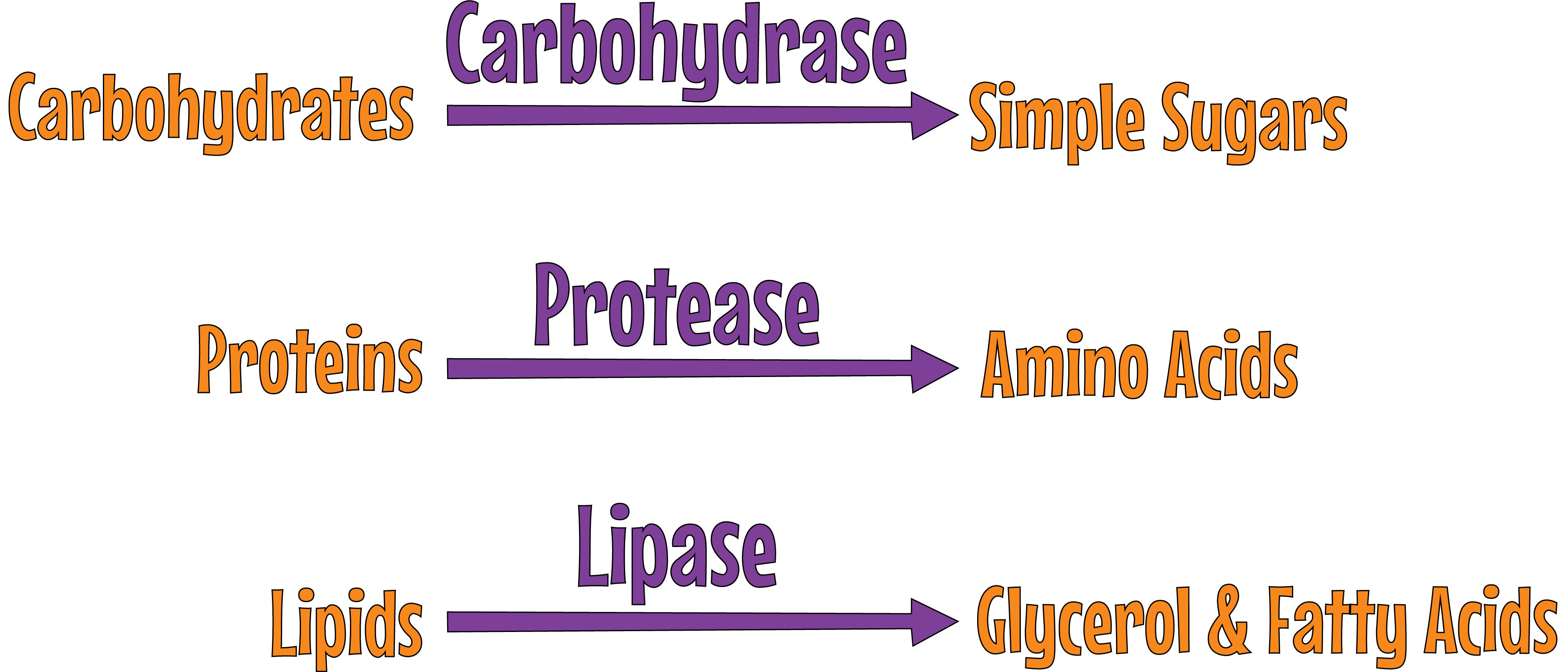
- CARBOHYDRASES break down carbohydrates into simple sugars.
- PROTEASES convert proteins into amino acids.
- LIPASES break down lipids into glycerol and fatty acids.
Examples of digestive enzymes:
- AMYLASE: A type of carbohydrase enzyme that breaks down STARCH into maltose (a simple sugar).
- PEPSIN: A type of protease enzyme that is produced in the STOMACH. It has a LOW OPTIMUM pH. The hydrochloric acid in the stomach provides a low pH for the pepsin to work at a faster rate. Pepsin breaks down PROTEINS into AMINO ACIDS.
Absorption and Utilisation of Digested Products
- Some products of digestion are used to synthesise new carbohydrates, proteins, and lipids.
- Other products are utilised in other ways, e.g. glucose is used in respiration to release energy.
The Digestive System & Enzymes
- Digestive enzymes are key in breaking down food into absorbable nutrients.
- These enzymes are produced by specialised cells in various digestive system GLANDS and the gut lining.
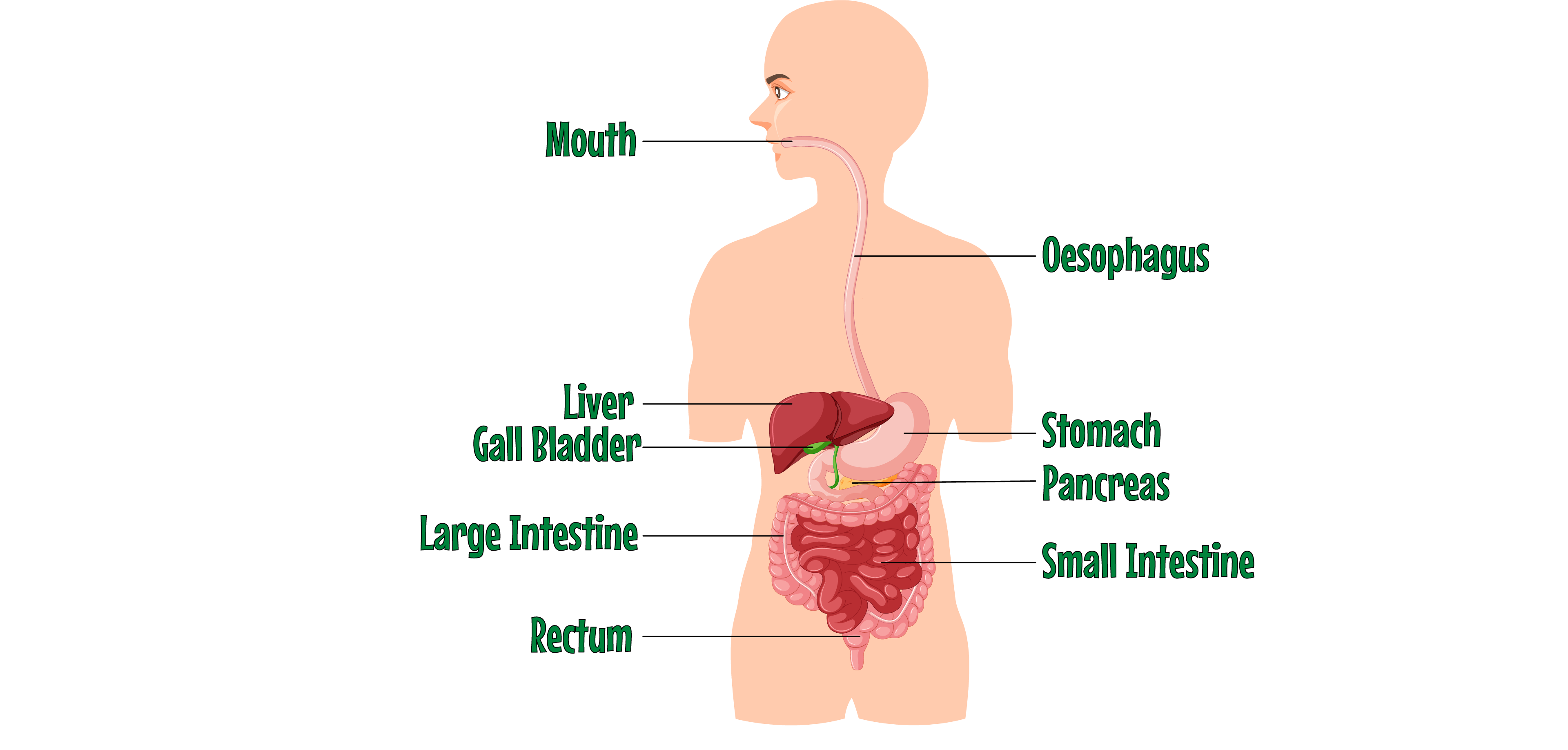
The Mouth
- Teeth CHEW the food
- SALIVARY GLANDS in the mouth secrete AMYLASE enzyme in saliva to begin carbohydrate digestion.
Oesophagus
- A tube that connects the mouth to the stomach
The Stomach
- Has muscular walls that churn food into smaller pieces
- It produces PEPSIN, a type of protease enzyme to break down PROTEINS
- It produces HYDROCHLORIC ACID to KILL BACTERIA and to provide the optimum pH for the pepsin to work in
The Liver
- Produces BILE, crucial for NEUTRALISING stomach acid and EMULSIFYING FATS into smaller droplets
- The bile is STORED in the GALL BLADDER.
The Pancreas
- It produces PROTEASE, CARBOHYDRASE, and LIPASE.
The Small Intestine
- It produces PROTEASE, CARBOHYDRASE, and LIPASE.
- This is where digestion is completed, where the broken down nutrients are ABSORBED into the bloodstream.
The Large Intestine
- The large intestine absorbs EXCESS WATER from digested food.
- Waste is eventually moved to the RECTUM as faeces and exits the body through the ANUS.