
Principles of Organisation
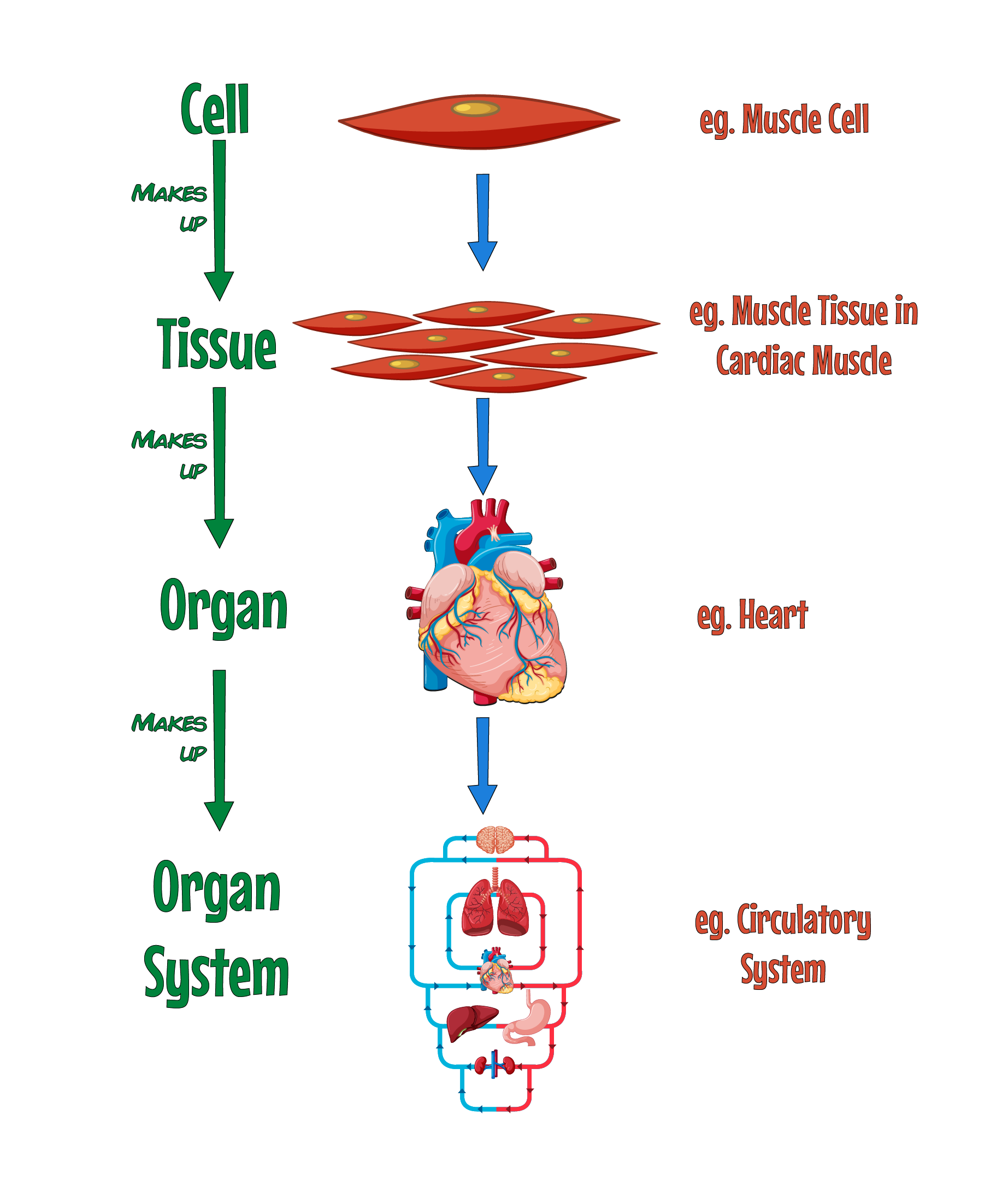
- Cells are the fundamental units of life, each designed to perform specialised functions through a process called DIFFERENTIATION.
- These specialised cells combine to form TISSUES, which then group to create ORGANS.
- Multiple organs work together to form ORGAN SYSTEMS within larger multicellular organisms.
Tissues:
- A TISSUE is a group of cells with similar structures and function that work together to carry out specific jobs. Examples in mammals include:
- Muscular tissue: Responsible for movement by contracting and relaxing.
- Glandular tissue: Produces and releases substances like enzymes and hormones.
- Epithelial tissue: Covers the surfaces of the body, such as the inside of the gut.
Organs:
- Organs are complex structures composed of different tissues, each contributing to the organ's overall function.
- For instance, the HEART is an organ that contains muscular tissue for PUMPING BLOOD around the body
Organ Systems: The Teamwork of Organs
- An ORGAN SYSTEM is a group of ORGANS working together to perform complex functions for the organism's survival.
- The CIRCULATORY SYSTEM is an example of an organ system