
The Cell Cycle: Creating New Cells
- To help an organism grow, develop and repair, the body needs to make new cells.
- This is done through the CELL CYCLE, which is a series of events that cells go through to grow and DIVIDE. The end result is the formation of 2 cells that are IDENTICAL to the original cell.
- The two cells formed are known as DAUGHTER CELLS.
There are 3 main stages to the cell cycle:
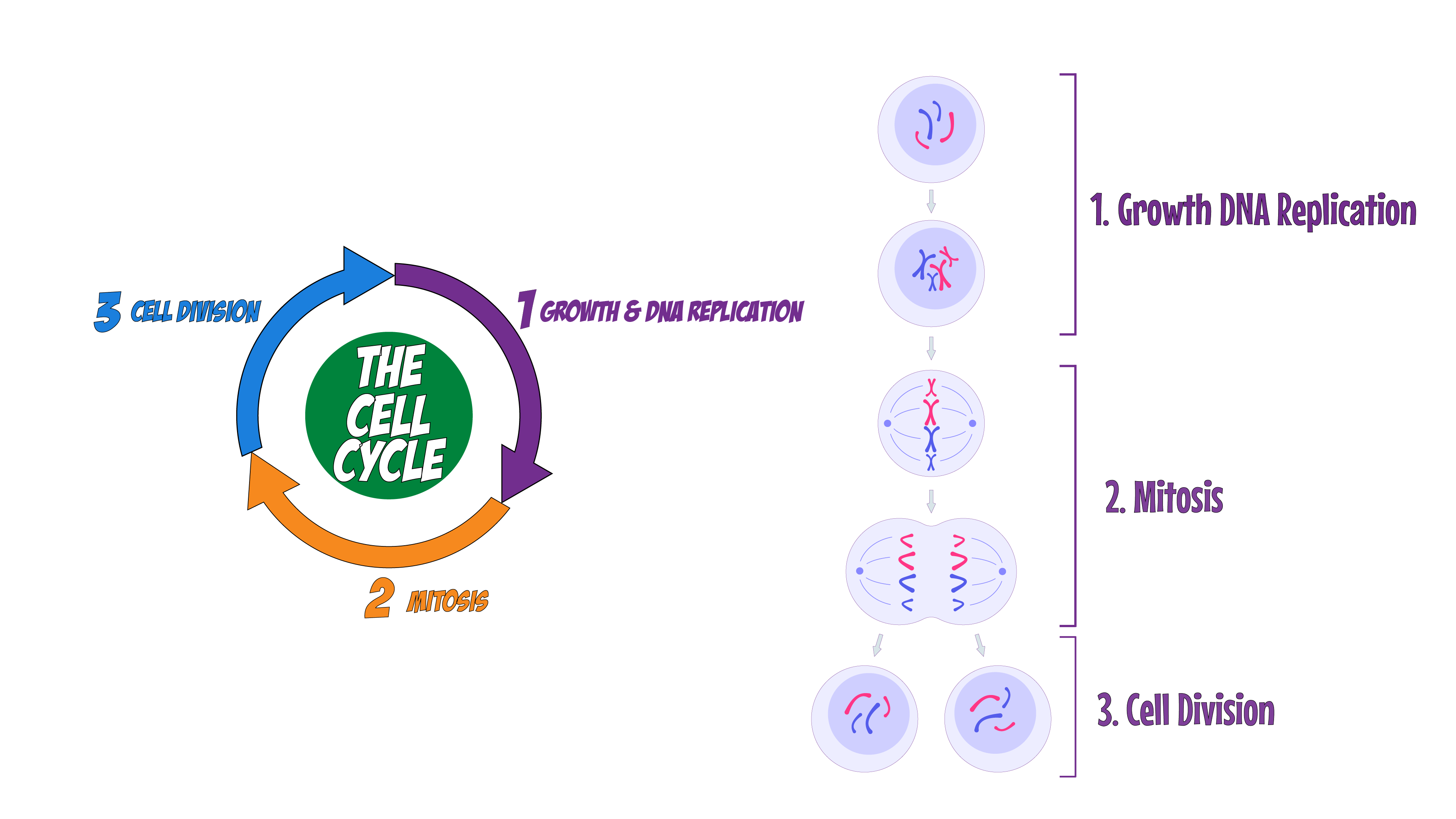
1. Growth and DNA Replication
- The cell increases the number of SUBCELLULAR STRUCTURES it has, including their MITOCHONDRIA and RIBOSOMES.
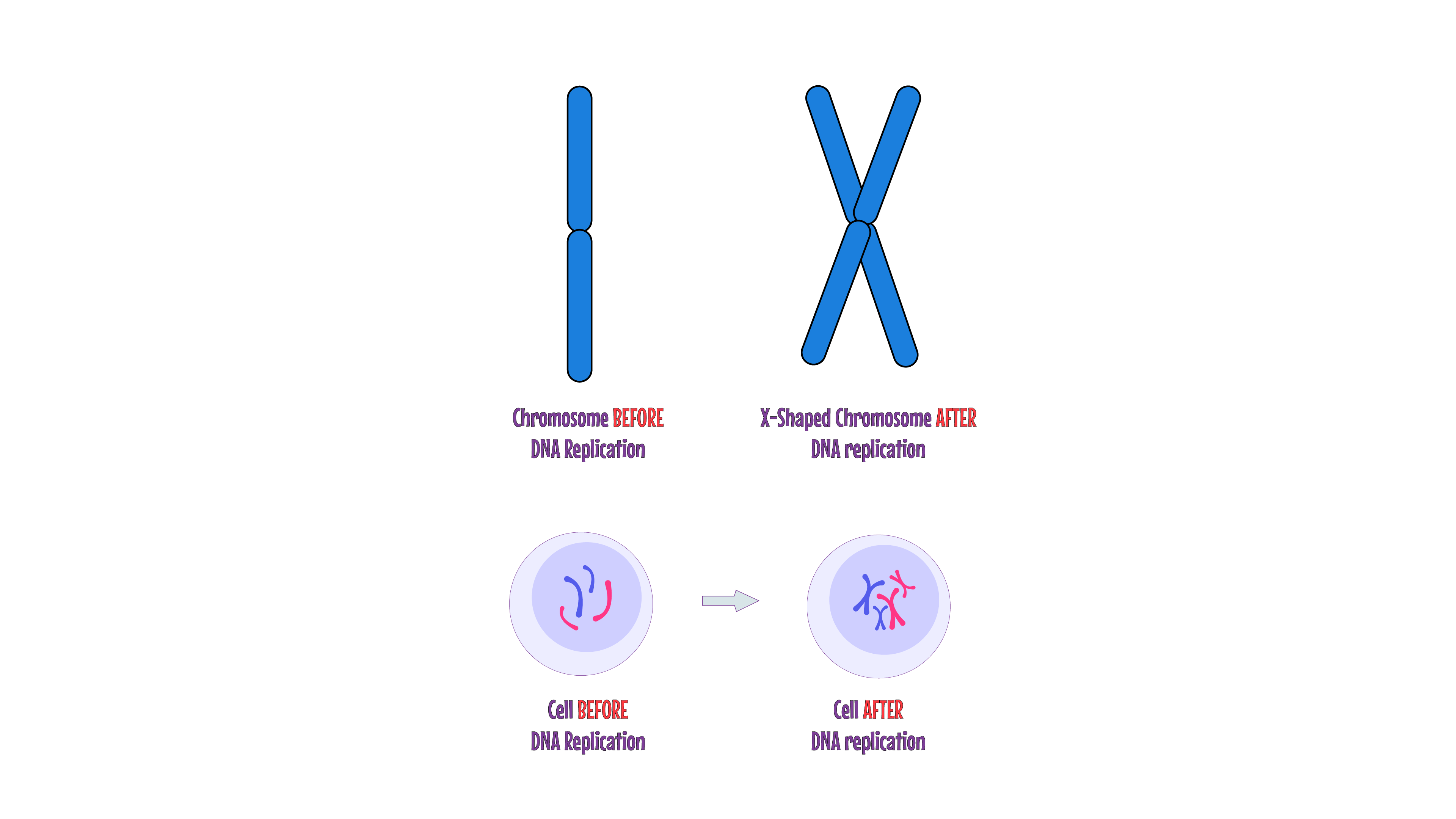
- The nucleus of the cell REPLICATES their DNA, forming two identical X-SHAPED CHROMOSOMES.
2. Mitosis
- The MEMBRANE of the nucleus breaks down.
- The chromosomes align in the CENTRE of the cell and are then pulled apart to opposite ends of the cell by structures known as CELL FIBRES.
3. Cell Division
- New membranes form around each set of chromosomes to form TWO NUCLEI.
- The cytoplasm and cell membrane SPLIT to form TWO IDENTICAL DAUGHTER CELLS.