Animal and plant cells (4.1.1.2) — AQA GCSE Biology Revision Notes
Revision notes for AQA GCSE Biology specification point 4.1.1.2, Animal and plant cells.
Animal, Plant & Bacteria Cells
Animal Cells

- Nucleus: Houses GENETIC MATERIAL (DNA) and controls cell activities.
- Cytoplasm: A gel-like substance where CHEMICAL REACTIONS occur.
- Cell Membrane: Controls what enters and exits the cell.
- Mitochondria: The site of AEROBIC RESPIRATION, which releases energy.
- Ribosomes: Where PROTEINS are synthesised.
Plant Cells

- Rigid Cell Wall: Composed of CELLULOSE and provides support and structure.
- Permanent Vacuole: Contains CELL SAP which is a storage for sugar and salts.
- Chloroplasts: The location of PHOTOSYNTHESIS. Contains CHLOROPHYLL to absorb light.
Comparing Plant and Animal Cells
- Animal Cells DO NOT have CELL WALLS or CHLOROPLASTS.
- They usually have SMALLER VACUOLES compared to plant cells.
Bacterial Cells:
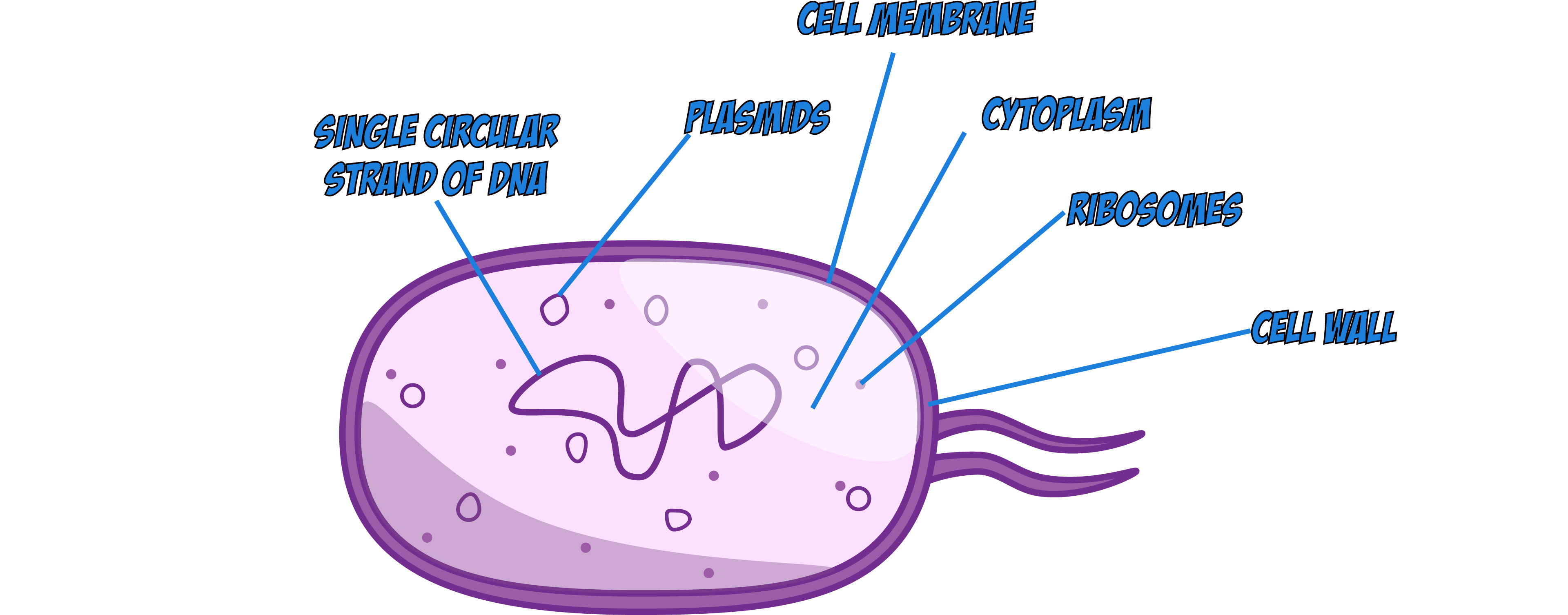
- Bacterial cells are PROKARYOTIC.
- They don’t have a true nucleus. Instead, they have a SINGLE CIRCULAR STRAND of DNA.
- Some have additional small rings of DNA called PLASMIDS.
Flash Revision Lab — free AQA GCSE Science revision notes, used by 150,000+ students. Rated 4.9/5 on Trustpilot.